
Abstract
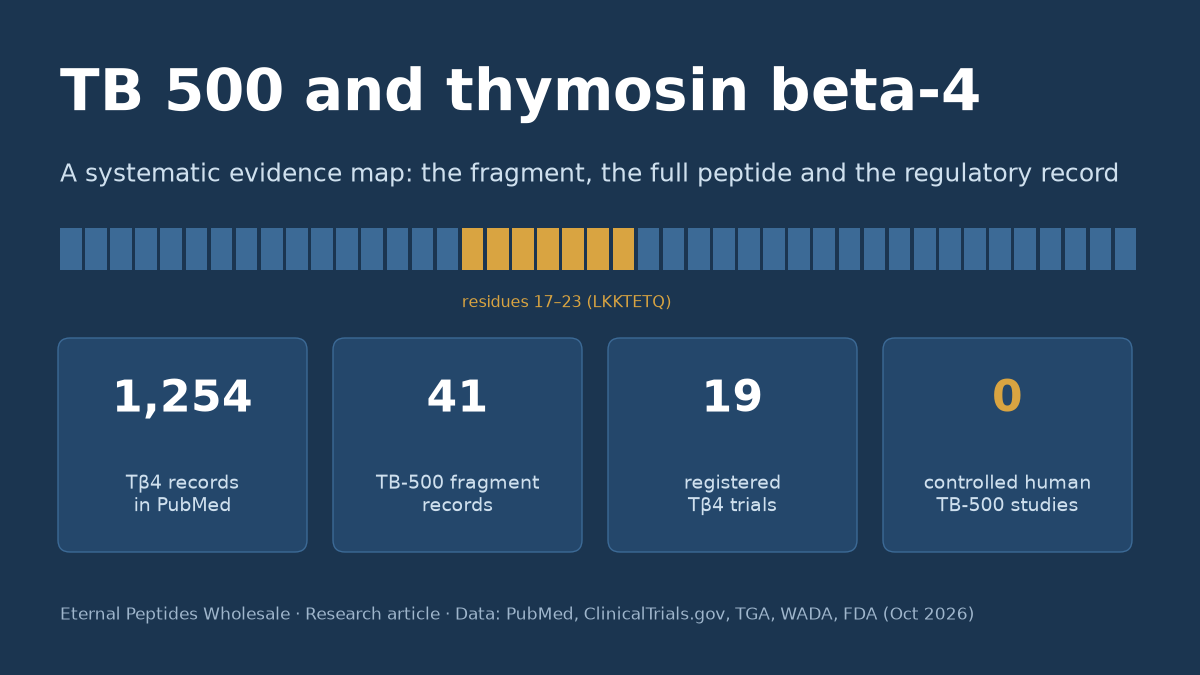
Background. TB 500 (also written TB-500 or TB500) is the name given to a synthetic seven-residue peptide, Ac-LKKTETQ, that copies residues 17 to 23 of thymosin beta-4 (Tβ4), a 43-residue actin-binding protein found in almost every human cell [1, 2, 3]. Online, the TB 500 peptide is routinely described with findings from studies of full-length thymosin beta-4. The two are different molecules, and the scientific, clinical and legal records for each differ as well. In Australia both are Schedule 4 substances listed in Appendix D of the Poisons Standard. In sport, the World Anti-Doping Agency (WADA) prohibits thymosin beta-4 and its derivatives at all times. In the United States, the Food and Drug Administration (FDA) has placed TB-500 in a category of bulk substances it considers may present significant safety risks [4, 5, 6].
Objective. To measure how large the thymosin beta-4 literature is compared with the literature that studies the TB-500 fragment itself; to classify what the label “TB-500” refers to in the papers that use it; to audit how every registered thymosin beta-4 human trial was registered and reported; and to set out a regulatory timeline checked at primary sources for Australia, anti-doping and the United States.
Methods. A systematic evidence map with reporting informed by PRISMA 2020 and its scoping-review extension [7, 8]. PubMed was searched through NCBI E-utilities on 31 October 2026 (Australia/Brisbane), with Europe PMC and the ClinicalTrials.gov API as cross-checks [9, 10, 11]. Thymosin beta-4 records were classified by the material studied and by research domain using rules applied to titles and abstracts, and the rules were checked against a hand-read random sample. Every record from a separate TB-500 fragment search was read in full abstract. Registry records were downloaded and coded for registration timing, results posting and links to publications. Legal and regulatory facts were read in the legislation, regulator pages and the WADA List.
Results. The strict search returned 1,254 thymosin beta-4 records: 1,095 primary studies, 148 reviews or commentaries and 11 exclusions. Of the primary studies, 629 (57.4%) measured the body’s own thymosin beta-4, 202 (18.4%) gave full-length thymosin beta-4 as an experimental agent, and 27 (2.5%) studied any derived fragment. The fragment search returned 49 records, of which 41 were confirmed on reading. That is about one TB-500 record for every 31 thymosin beta-4 records. Of the 41, 14 were analytical, anti-doping or metabolism studies, 10 were reviews or commentary, 7 were experimental studies and 1 described treated people (three case descriptions). Papers using the name TB-500 described at least three different materials. ClinicalTrials.gov held 19 genuine thymosin beta-4 trials, all of the full-length protein; the only registration naming TB-500 describes itself as fictional. Eleven of 17 trials with participants were registered after they started. Only 255 of 2,143 people enrolled in finished trials (11.9%) were in trials linked to a peer-reviewed full report. TB-500 and thymosin beta-4 have been in Schedule 4 and Appendix D since 1 June 2016, and they were absent from the February 2016 Poisons Standard [12, 13].
Conclusions. The TB 500 peptide has an evidence base far smaller than its reputation suggests. Most of what is cited as “TB-500 research” is research on a different, larger molecule, and most of what is published on the fragment itself concerns how to detect it in doping tests. No controlled human study of TB-500 has been published or registered as a genuine trial. In Australia, research-use labelling does not change its Schedule 4 and Appendix D status [14].
What is new here. This is, to our knowledge, the first whole-corpus map that sets the thymosin beta-4 literature beside the TB-500 fragment literature with reproducible counts. It is also the first to classify, paper by paper, what the label “TB-500” actually denotes. It adds a registry audit of all 19 thymosin beta-4 trials (registration timing, results posting and publication linkage) and flags a self-described fictional TB-500 registry record that is being cited elsewhere as a human trial. The regulatory timeline was rebuilt from the original instruments: the article dates the Australian listing to the June 2016 Poisons Standard and connects it to the Essendon anti-doping case. A recent scoping review covered tissue-repair studies only [15], and top-ranking pages describe TB-500 in general terms. Neither quantifies how little of the literature concerns the fragment.
Key findings
- PubMed holds 1,254 thymosin beta-4 records but only 41 confirmed records on the TB 500 fragment, about 1 for every 31. Of those 41, 14 are analytical or anti-doping studies and 10 are reviews or commentary [9].
- “TB-500” is not one defined material in the literature. Papers using the name described N-acetylated LKKTETQ, an unacetylated LKKTETQ conjugate and “synthetic thymosin beta-4”. Analyses of products sold under the name found inconsistent contents [16, 17, 18, 19].
- A WADA-funded metabolism study found that the main metabolite of TB-500 in vitro and in rats was a two-residue fragment. Of the parent peptide and its metabolites, only one metabolite showed activity in a fibroblast wound-closure assay [20, 21].
- All 19 genuine registered thymosin beta-4 trials tested the full-length protein. Eleven of 17 with participants were registered retrospectively, and about 88% of participants in finished trials are not covered by a peer-reviewed full report [11].
- TB-500 and thymosin beta-4 have been Schedule 4 and Appendix D substances in Australia since 1 June 2016. Possession without authority is illegal, and a “research use only” label does not change this [13, 4, 22].
- The WADA 2027 Prohibited List, in force from 1 January 2027, names “Thymosin-ß4 and its derivatives e.g. TB-500” under S2.3, prohibited at all times [5, 23].
Contents
- Introduction: why TB 500 needs an evidence map
- What TB 500 is: the fragment, the full-length protein and the names
- Methods: searches, classification and audits
- Results: search yield and publication trends
- Results: the thymosin beta-4 evidence map
- Results: the TB-500 research literature itself
- Results: thymosin beta-4 and TB 500 human studies and trial registrations
- Results: TB-500 regulatory status in Australia, sport and the United States
- Discussion
- Gap analysis: research questions for TB-500
- Limitations
- Conclusion
- Relevance to Eternal Peptides Wholesale
- Glossary
- Frequently asked questions about TB 500
- References
- Related research
- About this article
Introduction: why TB 500 needs an evidence map
Few research peptide names are searched as often as TB 500, and few are described with as little attention to what the name refers to. Commercial pages and forums commonly attribute to “TB-500” the findings of four decades of research on thymosin beta-4. That literature includes the discovery that Tβ4 is the main G-actin-sequestering peptide in mammalian cells, experiments on dermal and corneal wound repair in rodents, and high-profile cardiac studies in mice [24, 25, 26, 27]. Yet the molecule usually sold or discussed as TB-500 is not thymosin beta-4. It is a short synthetic peptide that reproduces one seven-residue stretch of it [16, 2]. Whether findings on the whole protein can be carried over to the fragment is an empirical question, and the literature has hardly asked it.
The confusion matters for three reasons. Scientifically, a fragment that keeps an actin-binding motif need not keep the actin-sequestering behaviour, the receptor or signalling activity, the stability or the safety profile of the 43-residue parent. In early structure-function work, a thymosin beta-4 fragment that still contained the 17–23 motif (residues 13–43) did not inhibit actin polymerisation in a DNase I assay [28]. Clinically, every registered human trial of a thymosin beta-4 product has tested the full-length protein in eye drops, topical gels or intravenous formulations [11], so the human data that exist do not concern the fragment. Legally, Australia, the anti-doping system and the US FDA have each dealt with TB-500 and thymosin beta-4 together but in different ways. A reader who conflates the molecules will misread the regulatory record as well as the science [4, 5, 6].
Two forces have made the problem more visible in 2026. In Australia, the Therapeutic Goods Administration (TGA) issued repeated warnings in 2026 about unapproved peptide products. In August it reported a seizure in New South Wales that included a product combining BPC-157 and TB-500 [29, 30]. In the United States, an FDA advisory committee met in July 2026 to consider whether TB-500 and six other peptides could be used in pharmacy compounding, and a narrow majority of members voted in favour of TB-500 even though FDA scientists had recommended against it [31, 32]. A cluster of reviews and commentaries for orthopaedic, sports-medicine, pain and pharmacy audiences followed, most of them published in 2026 [33, 34, 35, 36, 37, 38].
A scoping review published in June 2026 mapped tissue-repair studies of thymosin beta-4 and TB-500. It found that 70 of its 80 included studies evaluated full-length Tβ4 and that only one was a direct study of TB-500 [15]. That review was limited to repair outcomes and did not examine the wider literature, the trial registries or the regulatory documents. This article takes a broader approach. It maps the whole PubMed-indexed thymosin beta-4 literature alongside the TB-500 fragment literature, classifies what each paper using the name actually studied, audits every registered trial, and rebuilds the regulatory timeline from the original instruments. The aim is a reproducible description of what is known about the TB 500 peptide, what is known only about its parent protein, and what is not known at all. This article is not a guide to use, and it reports no doses or protocols.
What TB 500 is: the fragment, the full-length protein and the names
Thymosin beta-4: a 43-residue actin-sequestering protein
Thymosin beta-4 was sequenced from calf thymus in 1981 as a 43-residue peptide with an acetylated N-terminus. It was named as a thymic hormone, although later work showed it is present in most nucleated cells and is not thymus-specific [3, 39]. In 1991 it was shown to be indistinguishable from Fx, an actin-sequestering peptide of platelets. Within a year, experiments in living cells had established it as a major regulator of actin polymerisation [24, 40]. Thymosin beta-4 binds monomeric (G-) actin in a 1:1 complex and keeps it from polymerising. Profilin can then hand that actin to the growing ends of filaments, a shuttle whose structural basis was resolved in 2014 [41, 42, 43]. The human gene, TMSB4X, sits on the X chromosome. UniProt records a 44-residue precursor whose initiator methionine is removed, leaving the mature 43-residue chain [1]. Free in solution, thymosin beta-4 is largely unstructured. It is an intrinsically disordered protein that folds only partly when it binds actin, a property thought to underlie its many reported binding partners [44, 45].
A second strand of research concerns the N-terminal tetrapeptide. Ac-SDKP (N-acetyl-seryl-aspartyl-lysyl-proline) is released from thymosin beta-4 by meprin-α and prolyl oligopeptidase. It was first purified as an inhibitor of haematopoietic stem cell proliferation and is now studied mainly in fibrosis and inflammation [46, 47, 48, 49, 50]. Ac-SDKP has its own literature of 361 PubMed records [9], which is far larger than the TB-500 literature. It is relevant here because it shows that “a thymosin beta-4 fragment” is not a single thing: different parts of the protein have different, separately studied biology.
TB-500: a synthetic copy of residues 17 to 23
The actin-binding site of thymosin beta-4 was mapped in the early 1990s by mutation and NMR. Residues around the motif LKKTET, at positions 17 to 22 of the mature chain, make the principal contact with actin, and a single substitution in this motif of a related β-thymosin changed how it affects actin [51, 52, 45]. A synthetic heptapeptide covering residues 17 to 23 (LKKTETQ) was reported in 2003 to promote dermal wound repair in aged mice in parallel with full-length Tβ4 [53]. According to the FDA’s 2026 review, the material known as TB-500 appears to have first been synthesised around that time [32]. In 2012, two anti-doping laboratories characterised the N-terminally acetylated heptapeptide Ac-LKKTETQ as the active constituent of products sold as TB-500. One of them confirmed it in a preparation intended for horses [16, 54].
Table 1 sets out the identity data for each material. Two points stand out. First, TB-500 makes up 7 of 43 residues (16.3%) and about 18% of the molecular mass of full-length thymosin beta-4. On mass, the full-length protein is about 5.6 times larger (4,963 ÷ 889.0 = 5.58) [55, 2]. Second, the name itself is not a standard nonproprietary name. FDA’s presentation to its advisory committee stated that “TB-500” is not a United States Adopted Name, International Nonproprietary Name or IUPAC name. It also reported that the CAS number and molecular formula given in the compounding nomination matched neither the free base nor the acetate salt [32].
Table 1. Identity of thymosin beta-4, the TB 500 peptide and related materials, from primary database and regulator records
| Material | Sequence or description | Length | Formula and approximate molecular weight | Identifiers and notes |
|---|---|---|---|---|
| Thymosin beta-4 (mature human protein) | Ac-SDKPDMAEIEKFDKSKLKKTETQEKNPLPSKETIEQEKQAGES | 43 residues | About 4,963 g/mol | UniProt P62328; PubChem CID 45382195; precursor 44 residues before removal of the initiator methionine |
| TB-500 (free base) | Ac-LKKTETQ, residues 17–23, N-terminally acetylated | 7 residues | C38H68N10O14; about 889.0 g/mol | PubChem CID 62707662; UNII QHK6Z47GTG; CAS 885340-08-9 (per FDA) |
| TB-500 acetate | Acetate salt of Ac-LKKTETQ | 7 residues | About 949.1 g/mol | Salt form described in FDA’s review |
| Material in the US compounding nomination | Listed as TB-500 | Not stated | C38H66N10O14 (as nominated) | CAS 476014-70-7 as nominated; FDA found that formula and CAS match neither the free base nor the acetate |
| Unacetylated LKKTETQ | Residues 17–23 without the acetyl group | 7 residues | Not reported in the sources used | Used in a 2003 mouse study and, conjugated to a gel-forming motif, in a 2025 corneal study |
| Ac-SDKP | Residues 1–4, N-terminally acetylated | 4 residues | Not used here | Released by meprin-α and prolyl oligopeptidase; separate literature of 361 PubMed records |
| “TB4” or “Tβ4” in common usage | Ambiguous: used for both the full protein and, in some sources, TB-500 | — | — | Sport Integrity Australia: thymosin beta-4 is “also known as TB-500 and TB4” |
Sources for Table 1: UniProt, PubChem, FDA advisory committee materials, the Sport Integrity Australia substance page and the primary studies cited [1, 55, 2, 32, 56, 53, 17, 48].
The last row of Table 1 is the root of the problem this article measures. Sport Integrity Australia’s substance page states that thymosin beta-4 is “also known as TB-500 and TB4” [56]. For anti-doping purposes that grouping is reasonable, because the WADA List covers thymosin beta-4 “and its derivatives” [5]. In research terms it is a category error: the two are different molecules with different chemical identities, different masses and, as the results below show, very different evidence bases.
Methods: searches, classification and audits
Design and reporting standards for the TB 500 evidence map
This is a systematic evidence map: a structured, reproducible description of what has been studied, in what material and in which domain, rather than a pooled estimate of any effect. Reporting follows PRISMA 2020 and the PRISMA extension for scoping reviews where those items apply to evidence mapping [7, 8]. Every count in this article can be reproduced by running the search strings in Table 2 against the same date limit. All searches were run on 31 October 2026, beginning at 04:11 (Australia/Brisbane), with publication dates capped at 30 October 2026 so that same-day indexing would not change the totals. The protocol was not registered in advance. That is a limitation for a systematic review, but it matters less for a descriptive map whose searches and rules are published in full.
Information sources and search strings
PubMed was the primary source, queried through NCBI E-utilities [9]. A strict thymosin beta-4 search used nine unambiguous name variants in titles and abstracts. A broad search added the ambiguous abbreviation “TB4”, the gene symbol TMSB4 and the development codes of three thymosin beta-4 products and one recombinant product. A separate fragment search used TB-500 name variants, the LKKTETQ and LKKTET sequences and the phrase “thymosin beta-4 fragment”. Europe PMC was searched through its REST interface as a cross-check, including for preprints [10]. ClinicalTrials.gov was queried through its version 2 API with ten queries covering the substance names and product codes [11]. Table 2 gives the strings and yields.
Table 2. Search protocol and record counts for the thymosin beta-4 and TB-500 research evidence map (searches run 31 October 2026, Australia/Brisbane; publication dates to 30 October 2026)
| Search | Source and fields | Terms (summary) | Records |
|---|---|---|---|
| Thymosin beta-4, strict (main corpus) | PubMed, title/abstract | “thymosin beta-4”, “thymosin beta 4”, “thymosin beta4”, “thymosin-beta4”, “thymosin β4”, “thymosin β-4”, “Tβ4”, “Tbeta4”, TMSB4X | 1,254 |
| Thymosin beta-4, broad | PubMed, title/abstract | Strict terms plus “TB4”, “T beta 4”, TMSB4 and product codes | 1,388 |
| Product development codes only | PubMed, title/abstract | RGN-259, RGN-137, RGN-352, NL005 and unhyphenated variants | 7 |
| TB-500 fragment | PubMed, title/abstract | “TB-500”, “TB500”, “TB 500”, LKKTETQ, Ac-LKKTETQ, LKKTET, “thymosin beta-4 fragment” variants | 49 (41 confirmed) |
| Strict corpus with MeSH humans | PubMed | Strict terms AND humans[mh] | 670 |
| Strict corpus, animals only | PubMed | Strict terms AND animals[mh] NOT humans[mh] | 432 |
| Strict corpus, publication type review | PubMed | Strict terms AND review[pt] | 133 |
| Strict corpus, clinical trial / RCT publication type | PubMed | Strict terms AND clinical trial[pt]; AND randomized controlled trial[pt] | 10; 7 |
| Strict or product codes, clinical trial type | PubMed | (Strict OR codes) AND clinical trial[pt] | 11 |
| Strict corpus, cancer terms | PubMed | Strict terms AND (neoplasms[mh] OR cancer, tumour, carcinoma) | 275 |
| Strict corpus, biomarker terms | PubMed | Strict terms AND (biomarker, serum, plasma, saliva, gene expression, prognosis) | 315 |
| Strict corpus since 2020 | PubMed | Strict terms, 2020 onwards | 307 |
| Fragment search with MeSH humans / clinical trial / doping terms | PubMed | Fragment terms AND humans[mh]; AND clinical trial[pt]; AND (doping, mass spectrometry, detection, horse, equine) | 28; 1; 14 |
| Ac-SDKP | PubMed, title/abstract | “Ac-SDKP”, “AcSDKP”, full chemical name, goralatide | 361 |
| Thymosin beta-4 cross-check | Europe PMC, title/abstract | “thymosin beta 4”, “thymosin beta-4”, “thymosin β4” | 1,101 |
| TB-500 cross-check | Europe PMC, title/abstract; all fields | “TB-500”, “TB500”, LKKTETQ (Ac-LKKTETQ in all fields) | 55; 154 |
| Thymosin beta-4 preprints | Europe PMC, preprint source | “thymosin beta 4” OR “thymosin beta-4” | 19 |
| Trial registrations | ClinicalTrials.gov API v2 | Ten queries: substance names, TB-500 variants, RGN-259/137/352, NL005 | 26 unique; 20 relevant; 19 genuine |
Sources for Table 2: NCBI E-utilities, Europe PMC and ClinicalTrials.gov, queried on the date stated [9, 10, 11].
Eligibility, screening and classification
The strict PubMed search defined the main corpus. The broad search was used only to estimate how much the ambiguous abbreviation “TB4” adds (134 records, 1,388 − 1,254). Much of that excess is likely to be noise, because “TB4” is also used as an abbreviation in unrelated fields. Records were classified as primary studies, as secondary literature (reviews, editorials, comments and letters) or as excluded where the record did not concern thymosin beta-4. Each primary study was assigned to one main material and one main research domain. The material categories were: endogenous, where the study measured or manipulated the body’s own thymosin beta-4 (expression, biomarker, knockdown or knockout); full-length given, where thymosin beta-4 protein or recombinant thymosin beta-4 was administered or applied as an experimental agent; biochemistry or structure; derived fragments, covering any thymosin beta-4-derived peptide including Ac-SDKP and LKKTET-containing peptides; and unclassified. The domains were cancer; immunity and inflammation; cardiac; neurological; fibrosis and other organs; musculoskeletal; skin and wounds; cytoskeleton and biochemistry; eye; vascular; and other.
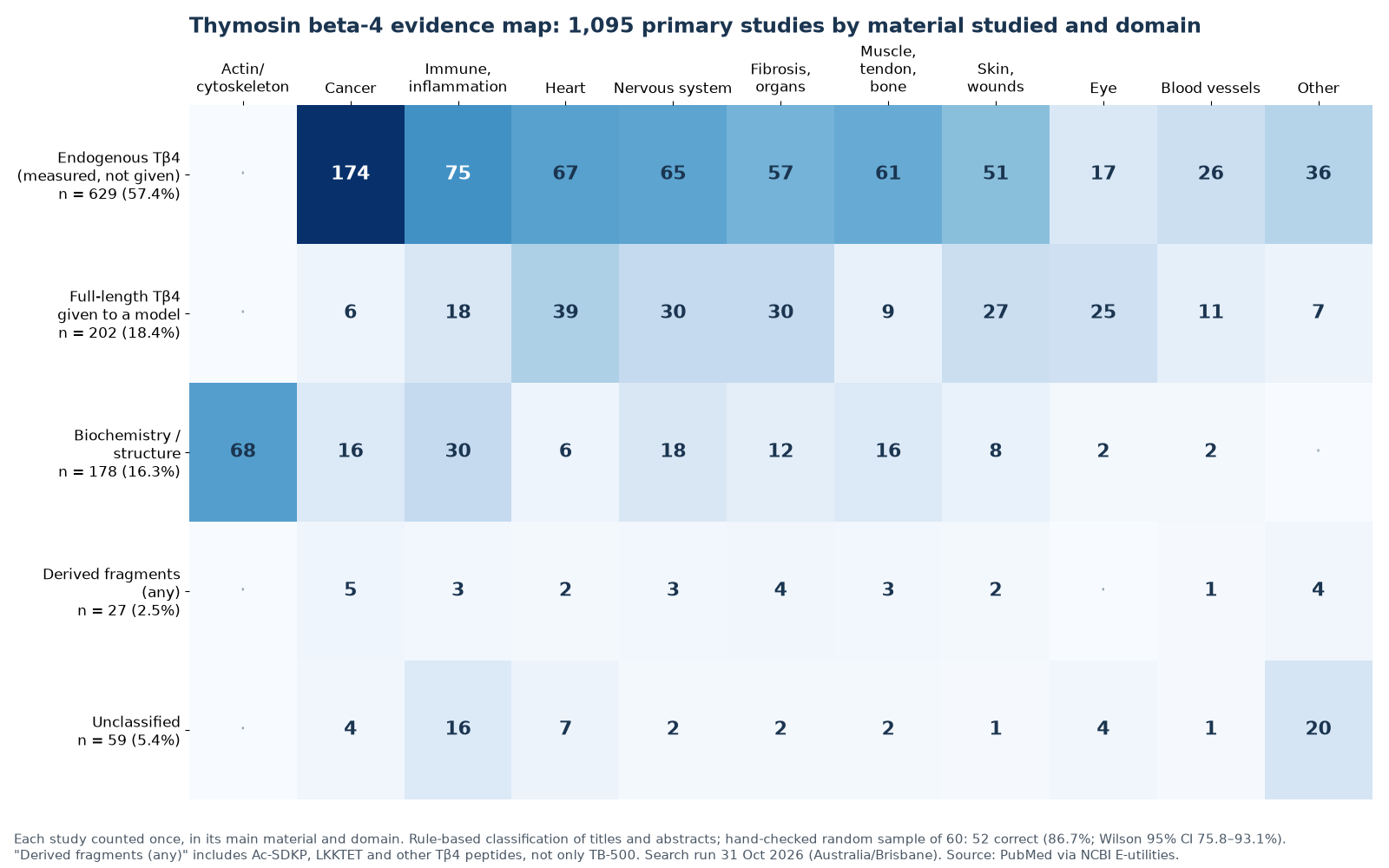
Classification used rules applied to titles and abstracts, with keyword precedence fixed before the run. To check the rules, a random sample of 60 primary records was read by hand and compared with the automatic labels. Agreement was 52 of 60 (86.7%; Wilson 95% confidence interval 75.8% to 93.1%), and most disagreements were between neighbouring domains rather than between materials. Each record is counted once, so Figure 2 shows where the main weight of each study lies, not every topic it touches.
The fragment search was handled differently because it is small and central to the question. All 49 records were read in full abstract. Eight were false positives in which the string “TB 500” or a similar term matched unrelated text, such as tuberculosis studies, a feed-additive trial in poultry and a soil-chemistry paper. The remaining 41 were coded by hand into seven groups: actin-motif biochemistry and structure; experimental studies administering or applying a fragment; studies of β-thymosin homologues in non-mammalian species; analytical, anti-doping, metabolism and product-analysis studies; reviews and commentary; human case descriptions; and other. For every record that used the name TB-500 or TB500, we recorded what material the authors said the name referred to.
Trial-registry audit
ClinicalTrials.gov records were retrieved in structured form through the API [11]. Of 26 unique records, 6 did not concern thymosin beta-4 or TB-500. One more, NCT07487363, states in its own summary that it is “fictional” and an example of a ClinicalTrials.gov-style record [57]. It was excluded from all analyses and is discussed separately. For each of the remaining 19 records we extracted the start date, the first-posted date, the completion date, phase, sponsor, enrolment (actual or estimated), whether results were posted and the reason for stopping where one was given. A trial was coded as registered retrospectively when it was first posted after its start month. It was linked to a peer-reviewed full report only where a PubMed article matched the condition, product, design and enrolment. Close but inexact matches were noted rather than counted.
Verification of regulatory facts
Australian scheduling was checked in the Poisons Standard instruments on the Federal Register of Legislation. We read the February 2016 and June 2016 instruments to date the listing, and the October 2026 instrument for current status [12, 13, 4]. The statutory framework is the Therapeutic Goods Act 1989 [58]. TGA positions were taken from its peptide pages, safety alerts and media releases [22, 14, 29, 30]. Anti-doping status was read in the WADA 2027 Prohibited List and the accompanying WADA release, with Sport Integrity Australia’s substance page and WADA’s release on the Court of Arbitration for Sport (CAS) decision in the Essendon case [5, 23, 56, 59]. US status was read on FDA’s bulk-substance safety page and in the July 2026 advisory committee materials, with an independent account of the committee vote [6, 32, 60, 31]. Secondary descriptions of regulation, including those in reviews, were not used as evidence of a regulatory fact.
Results: search yield and publication trends
Screening flow from 1,254 thymosin beta-4 records to 41 TB-500 records
The strict PubMed search returned 1,254 thymosin beta-4 records published to 30 October 2026 [9]. Eleven were excluded on screening because thymosin beta-4 was not a subject of the work. Of the remaining 1,243, 148 were secondary literature and 1,095 were primary studies. PubMed’s own publication-type tags give a sense of scale: 133 records are tagged as reviews, 10 as clinical trials and 7 as randomised controlled trials. Adding the product development codes brings the clinical-trial tag count to 11 [9]. The cross-check in Europe PMC found 1,101 records with thymosin beta-4 in the title or abstract. That is close to the PubMed figure once differences in indexing and synonym coverage are allowed for, and it suggests that the PubMed corpus is not missing a large body of indexed literature [10]. Europe PMC also held 19 preprints mentioning thymosin beta-4, none of which changes the picture described below.
The fragment search returned 49 records, of which 41 were confirmed as concerning TB-500, LKKTETQ or the LKKTET motif. The ratio of confirmed fragment records to thymosin beta-4 records is 41 to 1,254, or 1 to 30.6, about one TB 500 record for every 31 thymosin beta-4 records. Europe PMC gives a similar order of magnitude. It found 55 records naming TB-500, TB500 or LKKTETQ in the title or abstract, and 154 that mention one of the names anywhere in the text [10]. The gap between 55 and 154 is itself informative: TB-500 is mentioned in passing far more often than it is studied.
Publication trend: a mature thymosin beta-4 literature and a recent burst of TB-500 commentary
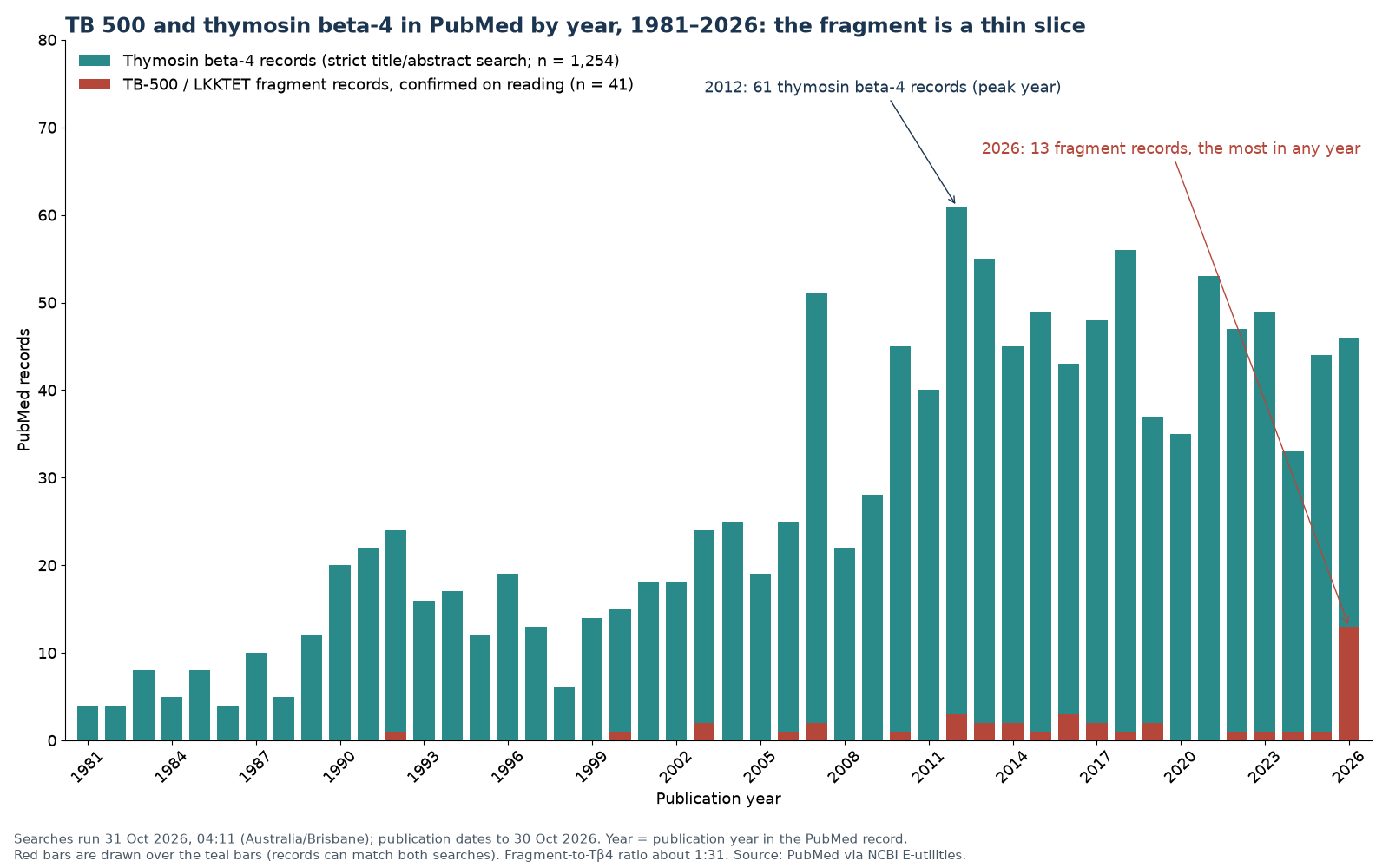
Figure 1 shows publication counts by year. The thymosin beta-4 literature grew steadily from the 1980s, through the actin biochemistry of the 1990s and the repair and cardiac studies of the 2000s, to a peak of 61 records in 2012. By decade, there were 60 records in the 1980s, 163 in the 1990s, 245 in the 2000s, 479 in the 2010s and 307 from 2020 to October 2026 [9]. The 2020s total already amounts to 24.5% of the whole corpus (307 ÷ 1,254), so the field is still active, although annual output in 2024 to 2026 (33, 44 and 46 records) is below the 2012 peak.
The fragment literature follows a different pattern. It is sparse and irregular, with no more than three records in any year until 2026, when 13 appeared: almost one third of all 41 (13 ÷ 41 = 31.7%). Seventeen of the 41 fragment records (41.5%) date from 2020 or later. As the TB-500 literature section below shows, the 2026 records are mostly reviews and commentary rather than new experiments. The sudden attention reflects public and regulatory interest in peptides, not a matching rise in primary research.
Results: the thymosin beta-4 evidence map
What was studied: mostly the body’s own thymosin beta-4
Figure 2 classifies the 1,095 primary studies by the material studied and by the main research domain. The most important finding is that most thymosin beta-4 research is not about giving thymosin beta-4 to anything. In 629 primary studies (57.4%), the subject was endogenous thymosin beta-4: its expression in tumours, its levels in blood, saliva or tissue, or the effect of silencing or deleting its gene. Another 178 (16.3%) were biochemical or structural studies, most of them on actin binding. Only 202 (18.4%) administered or applied full-length thymosin beta-4, whether natural, synthetic or recombinant, as an experimental agent. Studies of any thymosin beta-4-derived fragment numbered 27 (2.5%), and that category includes Ac-SDKP and other peptides, not only TB-500. The remaining 59 (5.4%) could not be assigned a material from the title and abstract.
The model systems point the same way. In vitro work was mentioned in 634 of the 1,095 primary studies (57.9%) and rodent experiments in 400 (36.5%). Human participants or human samples appeared in 217 (19.8%), but 169 of those 217 measured endogenous thymosin beta-4 in human tissue or fluids rather than giving it to anyone [9]. Counts by species overlap, because many papers use more than one model.
Research domains: cancer biology leads, repair studies are a minority
The largest single cell in the map is endogenous thymosin beta-4 in cancer, with 174 studies, 27.7% of all endogenous studies. Across all materials, cancer was the main domain of 205 primary studies (18.7%). The broader PubMed filter for cancer terms returned 275 records across the whole corpus [9]. This literature has repeatedly associated high thymosin beta-4 expression with migration, invasion or metastatic behaviour. Examples include colorectal carcinoma, mouse fibrosarcoma and colon cancer cells, where thymosin beta-4 was reported to trigger an epithelial-mesenchymal transition or to enhance integrin-linked kinase signalling [61, 62, 63, 64]. These are associations and mechanistic observations, not evidence that giving thymosin beta-4 or TB-500 causes cancer. They matter because the same migration-promoting biology is what repair-focused commentary emphasises, and the long-term consequences of exposure have not been studied in people.
Among the 202 studies that gave full-length thymosin beta-4, the leading domains were cardiac (39), neurological (30), fibrosis and other organs (30), skin and wounds (27) and eye (25). This is the literature behind most popular claims made for TB-500. It includes dermal wound studies in rats and mice [25], corneal wound studies [26], the cardiac experiments of 2004 to 2011 that reported cardiomyocyte survival, epicardial progenitor mobilisation and neovascularisation in mice [27, 65, 66, 67], and neurological studies in rodent models of embolic stroke and experimental autoimmune encephalomyelitis [68, 69]. Even within this literature, a central developmental finding was contested. Two knockout studies reported that thymosin beta-4 is dispensable for murine cardiac development and not required for embryonic viability or vascular development [70, 71]. A third group, using different models, reported an essential role in vascular smooth muscle development and vessel stability [72]. For readers of TB-500 claims, the more basic point is that none of these experiments used TB-500.
Narrative reviews by investigators long associated with thymosin beta-4 development describe this body of work as supporting repair applications in skin, eye, heart and nervous system [73, 74, 75, 76]. More recent reviews add the actin-binding modes and the expression of β-thymosins across human organs during development [43, 39]. These reviews are useful guides to the full-length protein. None of them presents TB-500 data as equivalent to thymosin beta-4 data.
Results: the TB-500 research literature itself
What the 41 TB-500 and LKKTETQ records study
Reading all 41 confirmed fragment records produced the distribution below. The largest group, 14 records (34.1%), consists of analytical, anti-doping, metabolism and product-analysis studies. Ten (24.4%) are reviews or commentary. Seven (17.1%) are experimental studies that applied or administered a fragment. Five (12.2%) concern β-thymosin homologues in non-mammalian species whose sequences contain the LKKTET motif. Four (9.8%) are actin-motif biochemistry or structural studies. One (2.4%) describes treated people. The arithmetic is 14 + 10 + 7 + 5 + 4 + 1 = 41. Put another way, only 7 of the 41 records, about one in six, report an experiment in which a fragment was given to cells or animals. The single human record is a report of three case descriptions combined with a narrative review [77].
The analytical group is the most coherent body of TB-500 research and also the least cited in popular accounts. Anti-doping laboratories synthesised and characterised the acetylated fragment, developed liquid chromatography-mass spectrometry methods for detecting it in horse urine and plasma, and included it in multi-peptide screening panels [16, 54, 78]. Later work compared in vitro metabolic models, proposed simplified urine screens for peptides under 2 kDa, and optimised solid-phase extraction and harmonised workflows [79, 80, 81, 82, 83, 84]. Reviews of peptide doping analysis placed TB-500 among emerging non-approved drugs [85, 86]. One analytical paper showed how much TB-500 can be lost by adsorption to laboratory glass and plastic. That is a practical point for anyone measuring low concentrations of the peptide, and its authors recommend choosing consumables according to each peptide’s physicochemical properties [87]. WADA funded a dedicated project on TB-500 metabolism and detection at Ghent University, approved in 2013 and now completed. The project description notes the product’s availability online and anecdotal use in horse racing and human sport [21]. A forensic study of doping forums illustrates the market these laboratories were responding to [88].
Metabolism: what TB-500 becomes after administration
The most consequential analytical finding concerns metabolism. A 2024 study quantified TB-500 and its metabolites in vitro and in rats. The main metabolite was the two-residue fragment Ac-LK, and Ac-LKK remained detectable for up to 72 hours. In a fibroblast wound-closure assay, only the metabolite Ac-LKKTE showed activity. The authors suggested that activity attributed to TB-500 might be due to that metabolite rather than to the parent peptide [20]. Earlier in vitro work had already shown that human serum, liver and kidney preparations each produce several TB-500 metabolites. In kidney microsomes and liver S9 fractions, peptides in the panel were cleaved at every bond despite their protective modifications [79, 80]. The 2024 authors also noted that the biological effects of TB-500 itself, as distinct from unacetylated LKKTETQ, had not been documented [20]. These results do not settle what TB-500 does in any species. They do show that “TB-500 activity” cannot be assumed to be the activity of an intact seven-residue molecule, let alone of full-length thymosin beta-4.
Experimental fragment studies: seven papers, several materials
The seven experimental records are small in number and diverse in material. The 2003 mouse study used an unacetylated synthetic LKKTETQ peptide alongside full-length thymosin beta-4 [53]. A 2006 proteomics study detected a thymosin beta-4 fragment in wound fluid and reported that LKKTETQ enhanced skin wound healing in vitro and in mice. The authors suggested a role for purinergic receptors [89]. In 2007, thymosin beta-4 and peptides derived from it, including the 17–23 sequence, induced mediator release from mast cells, a pro-inflammatory effect that is rarely mentioned in commentary [90]. A 2018 study in human hepatic stellate cells reported that the 17–23 peptide, but not the 1–15 peptide, reproduced the anti-fibrogenic effects of full-length thymosin beta-4 in that system [91]. In 2025, a corneal-injury study used LKKTETQ conjugated to a self-assembling hydrogel motif and called the construct a TB500 peptide hydrogel [17]. In 2026, a rat Achilles tendon study compared BPC-157 with a material its authors called “synthetic thymosin beta-4 (TB-500)” [18], and a mouse model of Alzheimer’s disease tested “Tβ4-derived peptides (TB500 and Ac-SDKP)” [92].
Taken together, these seven papers do not form a body of replicated evidence on one material. They used at least three distinct materials under overlapping names, in different species, tissues and outcome systems. No two of them tested the same material in the same model for the same outcome.
What “TB-500” denotes: an identity audit
For each record that used the name TB-500 or TB500, we recorded the material the authors said it referred to. Four meanings appear. In the anti-doping and metabolism literature, TB-500 is N-acetylated LKKTETQ, and this is the meaning best supported by chemical characterisation [16, 54, 20]. In the 2025 hydrogel study, “TB500” denotes unacetylated LKKTETQ conjugated to another peptide motif, which is a different chemical entity [17]. In the 2026 tendon study, the abstract describes TB-500 as “synthetic thymosin beta-4”, wording that, read literally, refers to the full-length protein [18]. In some institutional and commercial usage the name is simply treated as a synonym for thymosin beta-4 [56].
Product analyses add a fifth possibility: that the material is not what the label says. A 2023 study of products sold as TB500 and TB1000 found that their contents were not systematically consistent with their descriptions [19]. The FDA’s review found that the identity data in a US compounding nomination for TB-500 matched neither recognised form [32]. A 2026 orthopaedic review stated that TB-500 is a distinct seven-amino-acid fragment that is frequently conflated with full-length thymosin beta-4, despite the absence of validated biological or clinical equivalence [33]. Our counts measure the scale of that conflation: the fragment’s own literature is about one thirty-first the size of its parent’s, and within it the meaning of the name is unstable.
The five homologue records and four structural records in the fragment set reinforce the point from another direction. The LKKTET motif is conserved across β-thymosins from many species and is a recognised actin-binding module [51, 45], so its presence in a sequence says little on its own about the biology of a particular peptide. The 1993 DNase I study is the clearest warning. A fragment of thymosin beta-4 that contained the motif lost the protein’s ability to inhibit actin polymerisation, and the authors concluded that features before position 13 were required [28].
Results: human evidence for thymosin beta-4 and TB 500
Published human studies: full-length thymosin beta-4 only
The search found no controlled human study of TB 500 in any form. The only fragment record that describes treated people is a 2026 narrative review presenting three case descriptions. In those cases, peptide agents were part of a multimodal approach that also included dexamethasone and a local anaesthetic. The authors called the cases “hypothesis-generating” and stated that causality could not be established [77]. The FDA’s July 2026 briefing reached the same conclusion from a regulatory search. It found no human studies, no nonclinical toxicity studies and no adverse-event reports for TB-500 [32]. A Health Affairs analysis of the FDA’s tables records zero exposed participants [31].
Full-length thymosin beta-4 has a small published clinical record. Eight controlled studies reported results for administered thymosin beta-4:
- an intravenous phase 1 study of synthetic thymosin beta-4 in 40 healthy volunteers, with four cohorts of 10 [93];
- a phase 1 programme of recombinant human thymosin beta-4 in 84 healthy volunteers, 54 in single-dose and 30 in multiple-dose cohorts [94];
- a topical study in 73 randomised patients with venous stasis ulcers [95, 96];
- three eye-drop trials, with 9 patients with severe dry eye, 72 participants in a controlled adverse environment and 18 patients with neurotrophic keratopathy [97, 98, 99];
- a scalp study in 71 patients with seborrhoeic dermatitis that used an active comparator and 21 healthy controls [100];
- a 96-patient randomised study of recombinant thymosin beta-4 after ST-elevation myocardial infarction [101].
The arithmetic is 40 + 84 + 73 + 9 + 72 + 18 + 71 + 96 = 463 participants randomised or allocated across all eight studies. Two features of this record matter more than its size. First, each study was sponsored by, or conducted with, the developer of the product it tested, and several papers declare employees of the sponsor as authors [94, 99, 101]. Second, the results were mixed even on the authors’ own terms. In the controlled-environment dry-eye trial, significant differences were reported for secondary rather than primary endpoints [98]. In the neurotrophic keratopathy trial, the difference in complete healing did not reach conventional statistical significance (p = 0.0656) [99]. In the myocardial infarction study, the authors reported a smaller infarct area in the treated group at 90 days but themselves called for “further rigorous randomized studies” [101]. The safety reports describe infrequent, mild or moderate adverse events and no dose-limiting toxicities in the phase 1 programmes [93, 94]. Those are short-term observations in small, selected populations. They do not establish long-term safety.
The remaining human records are uncontrolled or indirect. They include nine compassionate-use patients with chronic neurotrophic corneal defects [102], a 10-patient pilot of autologous cells pretreated with thymosin beta-4 before transplantation, in which patients received the cells rather than the peptide [103], and an open-label study of a multi-ingredient hair formulation [104]. There are also design and background papers, among them a proposal for epidermolysis bullosa and a review of the phase 2 dermal programme [105, 106]. None of these involved TB-500. None can show what TB-500 does in people.
The trial registry: 19 trials, 2,143 participants, incomplete reporting
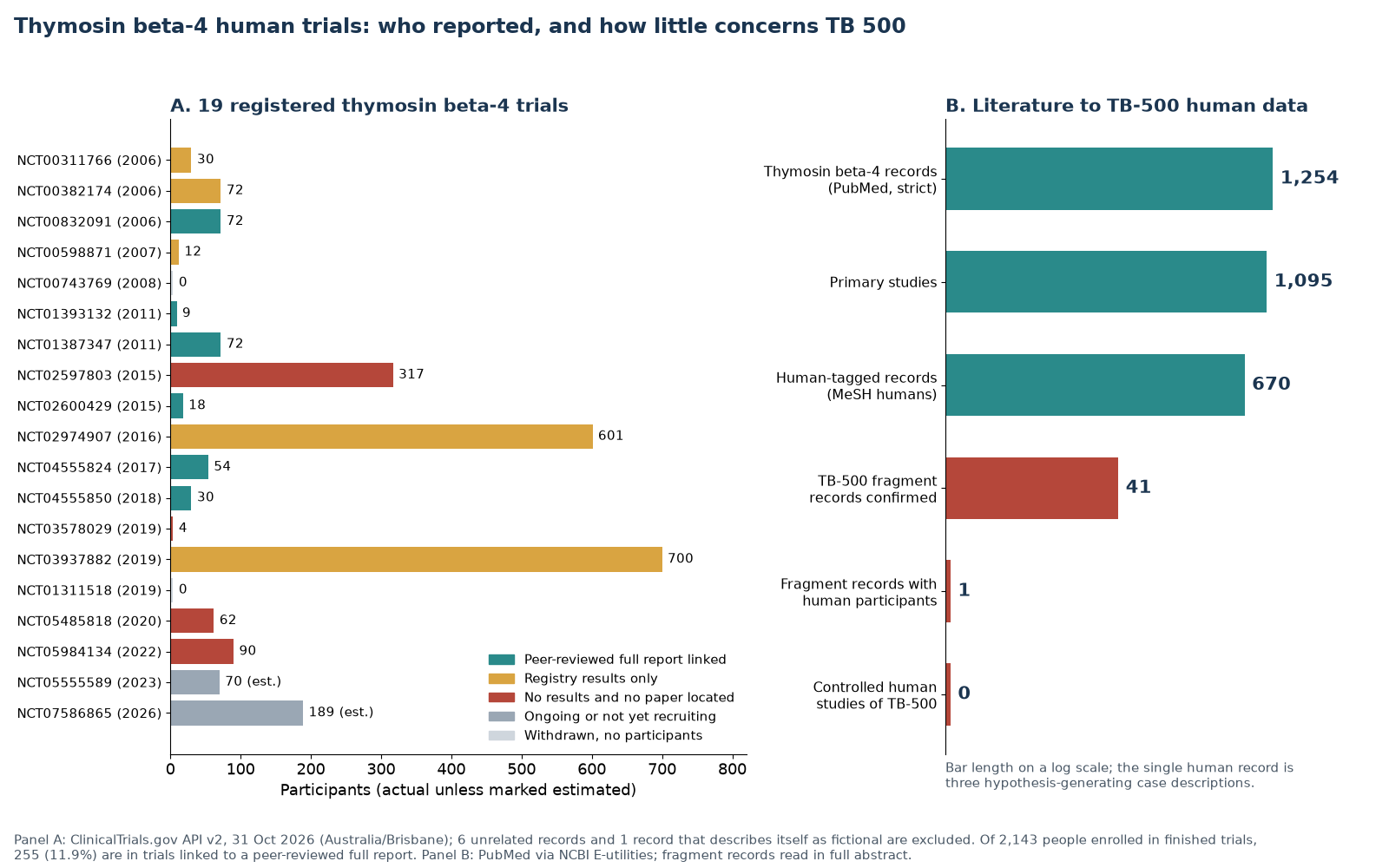
Table 3 lists the 19 registered human trials of thymosin beta-4. By indication there are 8 ocular trials, 4 wound or skin trials, 4 cardiac trials and 3 in healthy volunteers. Sponsors were ReGenTree (7), RegeneRx (5), Beijing Northland Biotech (5), Lenus Therapeutics (1) and Michigan Cornea Consultants (1). Two trials were withdrawn before enrolment. One was an intravenous phase 1 study that was never initiated because of contract manufacturing issues, and the other was a myocardial infarction trial [107, 108]. Two are ongoing [109, 110]. The 15 finished trials, whether completed or terminated, enrolled 2,143 participants. Four trials were terminated, with reasons given as lack of patient availability and expiry of study drug, slow recruitment, and a business decision (twice) [111, 112, 113, 114].
The audit found three reporting gaps (Figure 3).
- Retrospective registration. Eleven of the 17 trials that started were first posted after their start month (11 ÷ 17 = 64.7%). Five were first posted only after their recorded completion date. These were the 2006–2009 venous ulcer trial and the four Northland trials [115, 116, 117, 118, 119].
- Registry results. Nine of the 15 finished trials (60.0%) have results posted on ClinicalTrials.gov.
- Peer-reviewed reports. Only 6 of the 15 finished trials, with 255 of 2,143 participants (11.9%), could be linked to a peer-reviewed trial report. Results for another 1,415 participants (66.0%) exist only as registry postings, and 473 participants (22.1%) are covered by neither registry results nor a matched publication. The check is 255 + 1,415 + 473 = 2,143.
The largest single block of unreported evidence is the ARISE dry-eye programme. ARISE-1, -2 and -3 together enrolled 1,618 participants (317 + 601 + 700), which is 75.5% of all participants in finished thymosin beta-4 trials. No peer-reviewed full report of any of the three was located, although ARISE-2 and ARISE-3 have posted registry results [120, 121, 122]. A published 96-patient myocardial infarction study from the Northland programme could not be matched to either completed Northland cardiac record, whose enrolments are 62 and 90 [101, 118, 119], so it was not counted as a linked report.
Table 3. The 19 registered human trials of thymosin beta-4, by start date, with the registry reporting audit. No registered trial of TB-500 was found. “Prospective” means first posted no later than the month the trial started.
| Registry ID | Sponsor | Condition or population | Phase | Status | Enrolment | Prospective registration | Results posted in registry | Peer-reviewed trial report linked |
|---|---|---|---|---|---|---|---|---|
| NCT00311766 | RegeneRx | Epidermolysis bullosa wounds | 2 | Terminated | 30 | No | Yes | None located |
| NCT00382174 | RegeneRx | Pressure ulcers | 2 | Completed | 72 | No | Yes | Review only |
| NCT00832091 | RegeneRx | Venous stasis ulcers | 2 | Completed | 72 | No (posted after completion) | Yes | Yes |
| NCT00598871 | ReGenTree | Corneal wounds in people with diabetes | 2 | Terminated | 12 | No | Yes | None located |
| NCT00743769 | RegeneRx | Healthy volunteers (intravenous phase 1) | 1 | Withdrawn | 0 | n/a | No | n/a |
| NCT01393132 | Michigan Cornea Consultants | Severe dry eye | 2 | Completed | 9 | No | Yes | Yes |
| NCT01387347 | ReGenTree | Dry eye (controlled adverse environment) | 2 | Completed | 72 | Yes | Yes | Yes |
| NCT02597803 | ReGenTree | Dry eye (ARISE-1) | 2/3 | Completed | 317 | No | No | None located |
| NCT02600429 | ReGenTree | Neurotrophic keratopathy (SEER-1) | 3 | Terminated | 18 | No | Yes | Yes |
| NCT02974907 | ReGenTree | Dry eye (ARISE-2) | 3 | Completed | 601 | Yes | Yes | None located |
| NCT04555824 | Beijing Northland | Healthy volunteers (phase 1a, recombinant) | 1 | Completed | 54 | No (posted after completion) | No | Yes |
| NCT04555850 | Beijing Northland | Healthy volunteers (phase 1b, recombinant) | 1 | Completed | 30 | No (posted after completion) | No | Yes |
| NCT03578029 | Lenus Therapeutics | Junctional and dystrophic epidermolysis bullosa | 2 | Terminated | 4 | Yes | No | None located |
| NCT03937882 | ReGenTree | Dry eye (ARISE-3) | 3 | Completed | 700 | Yes | Yes | None located |
| NCT01311518 | RegeneRx | Acute myocardial infarction | 2 | Withdrawn | 0 | n/a | No | n/a |
| NCT05485818 | Beijing Northland | Acute myocardial infarction | 2 | Completed | 62 | No (posted after completion) | No | None matched |
| NCT05984134 | Beijing Northland | Acute myocardial infarction | 2 | Completed | 90 | No (posted after completion) | No | None matched |
| NCT05555589 | ReGenTree | Neurotrophic keratopathy (SEER-2) | 3 | Recruiting | 70 (estimated) | Yes | No | n/a (ongoing) |
| NCT07586865 | Beijing Northland | Acute myocardial infarction (recombinant) | 2 | Not yet recruiting | 189 (estimated) | Yes | No | n/a (ongoing) |
Sources for Table 3: ClinicalTrials.gov records retrieved through the API v2 on 31 October 2026 (Australia/Brisbane) and the linked publications [11, 111, 123, 106, 115, 95, 112, 107, 124, 97, 125, 98, 120, 113, 99, 121, 116, 94, 117, 94, 114, 122, 108, 118, 119, 109, 110]. “Review only” means the trial’s results appear in a narrative review rather than a full trial report. “None matched” means that a published trial from the same sponsor was found but its enrolment did not match the registry record.
A registry record that is not a trial
One ClinicalTrials.gov record names TB-500 in its title. It describes a placebo-controlled phase 1/2 study in adults with stable atherosclerotic cardiovascular disease. Its own summary opens: “This fictional study is an example of a ClinicalTrials.gov-style record” [57]. It was excluded from every count in this article. At least one high-ranking web page presents it as the first human randomised trial of TB-500. That illustrates the gap between search visibility and verification, and it is the reason this review reads each registry record rather than counting search hits.
Results: the regulatory record for TB 500 and thymosin beta-4
Australia: Schedule 4 since June 2016
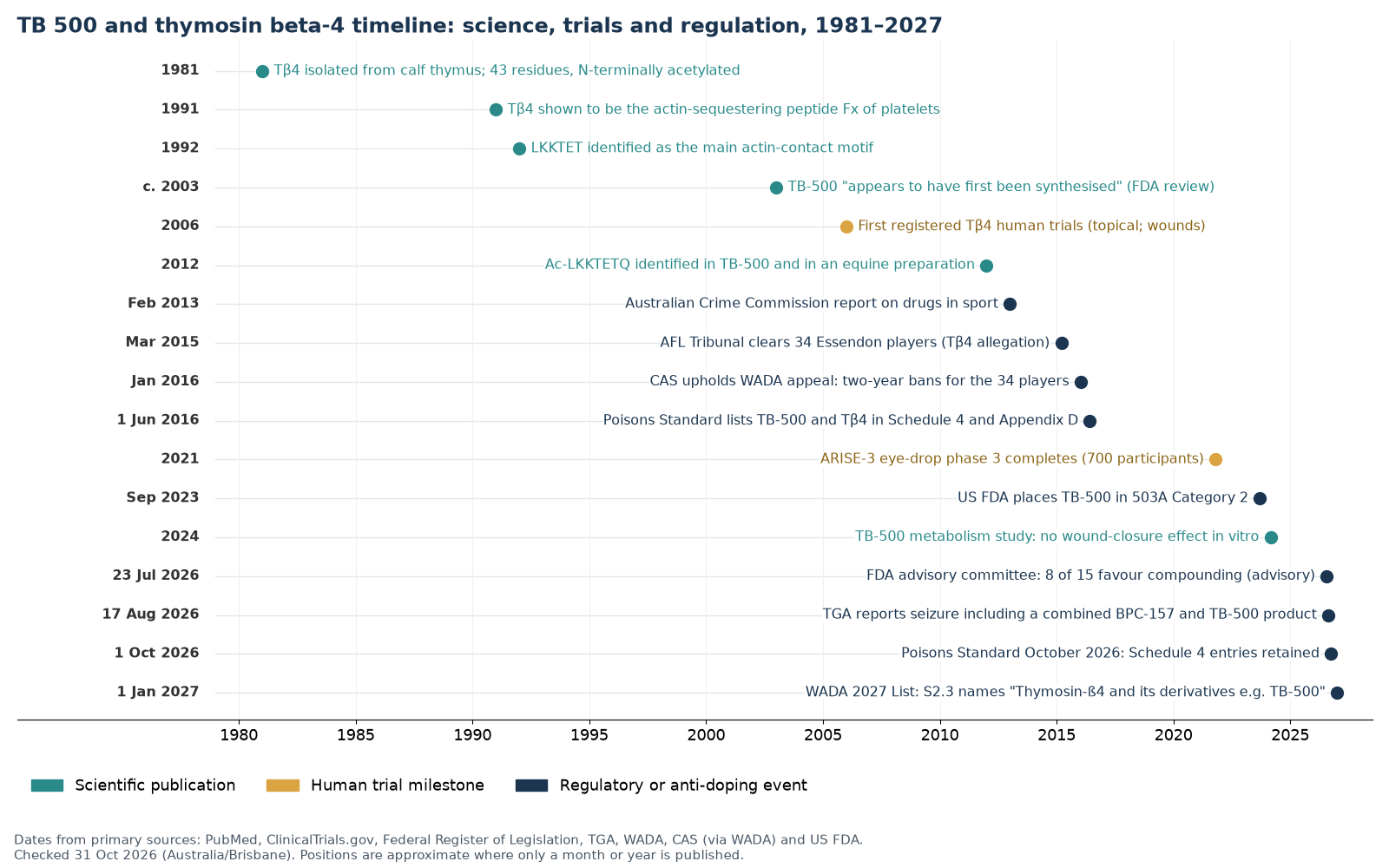
Neither TB-500 nor thymosin beta-4 appears in the Poisons Standard of February 2016 [12]. Both appear in the Poisons Standard of June 2016, which commenced on 1 June 2016. That instrument places “TB-500” and “THYMOSIN BETA 4 (THYMOSIN β4)” in Schedule 4, prescription-only medicines, and in Appendix D, clause 5, which lists substances whose possession without authority is illegal [13]. The current instrument, the Poisons Standard of October 2026, keeps both entries in Schedule 4 and in Appendix D, clause 5 (items 38 and 39) [4]. In practice, the scheduling interacts with state and territory poisons laws. The Commonwealth regulates therapeutic goods under the Therapeutic Goods Act 1989 [58].
The TGA has stated repeatedly in 2026 that labelling does not change this position. Its April safety alert says that disclaimers such as “research use only” do not make supply lawful or change a product’s regulatory status [14]. Its guidance on how it regulates therapeutic peptide products makes the same point [22]. A June media release warned about the public health risks of unapproved peptide products, over whose composition the TGA has no oversight [29]. An August release reported that warrants executed in New South Wales on 4 August 2026 led to the seizure of goods that included a product combining BPC-157 and TB-500 [30]. Sport Integrity Australia’s substance page describes thymosin beta-4 as “also known as TB-500 and TB4” and not approved by the TGA or any other regulatory agency [56].
Sport: the Essendon case and the 2027 Prohibited List
Thymosin beta-4 has an unusual place in Australian sport. An Australian Crime Commission report in February 2013 led to an anti-doping investigation of the Essendon Football Club’s 2012 supplements programme. The AFL Anti-Doping Tribunal cleared the players in March 2015. On WADA’s appeal, the Court of Arbitration for Sport ruled in January 2016 that 34 current and former players had committed anti-doping rule violations involving thymosin beta-4 and imposed two-year periods of ineligibility commencing 31 March 2015 [59].
The 2027 Prohibited List, published on 21 September 2026 and in force from 1 January 2027, lists “Thymosin-ß4 and its derivatives e.g. TB-500” under S2.3, among substances prohibited at all times. All S2 substances are non-Specified [5, 23]. Sport Integrity Australia states that a Therapeutic Use Exemption would not be granted for thymosin beta-4 [56]. The wording “and its derivatives” matters here. Whatever the chemical identity of a product sold as TB-500, the List covers both the full-length protein and its fragments.
United States: Category 2 and the July 2026 advisory committee
In the United States, TB-500 appears on the FDA’s list of bulk drug substances nominated for compounding that may present significant safety risks, known as Category 2. The FDA states that the thymosin beta-4 fragment (LKKTETQ), also known as TB-500, may pose a risk of immunogenicity because of aggregation and peptide-related impurities, and that it has not identified any human exposure data [6]. According to a Health Affairs analysis, the FDA placed 19 peptides in Category 2 in September 2023 [31]. Some web pages give a later date for TB-500’s reclassification, which the primary sources reviewed here do not support.
The FDA’s Pharmacy Compounding Advisory Committee met on 23–24 July 2026 to consider seven peptide bulk drug substances, including TB-500 [60]. The FDA’s briefing noted that “TB-500” is not a USAN, INN or IUPAC name. It reported that the nomination’s identity data matched neither the free base nor the acetate. It also described the substance as not well characterised, with no human studies, no nonclinical toxicity studies and no adverse-event reports, and it proposed not adding TB-500 to the 503A bulks list [32]. The committee voted 8 in favour, 6 against and 1 abstaining on including TB-500, a bare majority of 8 of 15 (53.3%). The vote is advisory only, and FDA scientists had proposed adding none of the seven peptides [31]. Commentary in pharmacy and medical journals has since discussed the vote’s implications for compounding standards and the risks of unregulated injectable peptides [37, 38].
Table 4. The regulatory record for TB 500 and thymosin beta-4, verified at primary source.
| Jurisdiction or body | Instrument or event | Date | Position on TB-500 | Position on thymosin beta-4 |
|---|---|---|---|---|
| Australia (TGA) | Poisons Standard, February 2016 | February 2016 | Not listed | Not listed |
| Australia (TGA) | Poisons Standard, June 2016 | Commenced 1 June 2016 | Schedule 4; Appendix D, clause 5 | Schedule 4; Appendix D, clause 5 |
| Australia (TGA) | Poisons Standard, October 2026 | Current | Schedule 4; Appendix D, clause 5 (item 38 or 39) | Schedule 4; Appendix D, clause 5 (item 38 or 39) |
| Australia (TGA) | Safety alert and regulatory guidance | 13 April 2026 | “Research use only” disclaimers do not change regulatory status | As for TB-500 |
| Australia (TGA) | Media release on enforcement | 17 August 2026 | Seized goods included a product combining BPC-157 and TB-500 | Not named |
| Court of Arbitration for Sport | WADA appeal in the Essendon case | January 2016 | Not at issue | Violations found; 34 players received two-year bans from 31 March 2015 |
| WADA | 2027 Prohibited List, S2.3 | In force 1 January 2027 | Named as an example of a prohibited derivative; non-Specified | Prohibited at all times; non-Specified |
| Sport Integrity Australia | Substance education page | Current | Treated as another name for thymosin beta-4 | Not approved by any regulator; no Therapeutic Use Exemption |
| US FDA | Category 2 list of compounding bulk substances | Placed September 2023; page current April 2026 | Immunogenicity concern; no human exposure data identified | Not separately listed on the page reviewed |
| US FDA advisory committee | Pharmacy Compounding Advisory Committee | 23–24 July 2026 | 8 for, 6 against, 1 abstaining (advisory only); FDA had proposed not adding it | Not considered as such |
Sources for Table 4: [12, 13, 4, 14, 22, 30, 59, 5, 23, 56, 6, 31, 32].
Discussion: what the TB 500 evidence map shows
This review set out to measure how much of the thymosin beta-4 literature applies to the material sold and discussed as TB-500. The answer is very little. TB-500 records make up about 1 in 31 of the thymosin beta-4 literature. Fewer than one in five of the TB-500 records report an experiment that gave the fragment to cells or animals, and none reports a controlled human study. The full-length protein has a real but modest clinical record. Even that record is dominated by sponsor-run studies, and most participants are in trials without peer-reviewed reports. The sections below set out why these findings matter for anyone reading claims about TB-500, and where the research gaps lie.
The identity problem: one name, several materials
The most basic finding is that “TB-500” does not reliably denote one substance. The chemically characterised meaning, N-acetylated LKKTETQ, comes from anti-doping laboratories working backwards from seized or purchased products [16, 54]. Other researchers have used the name for an unacetylated conjugate [17] or for “synthetic thymosin beta-4” [18], and sporting bodies use it as a synonym for the full-length protein [56]. Product analyses show that what is in a vial may differ again from any of these descriptions [19]. The FDA found that the identity data in a formal compounding nomination matched neither recognised chemical form [32].
The consequence is practical, not just semantic. A seven-residue peptide of about 889 Da and a 43-residue protein of about 4,963 Da differ in size by a factor of 5.58. They are expected to differ in stability, clearance, receptor and actin interactions and immunogenic potential. The DNase I experiment showed that a fragment containing the LKKTET motif lacked the full protein’s actin-sequestering activity, because residues before position 13 were required [28]. Mutational and structural work places the actin-binding interface across an extended region of thymosin beta-4, not in the motif alone [52, 42, 44]. A reader who sees “TB-500” in a paper, a regulatory document or a product description should first ask which material is meant, and whether its identity was confirmed analytically.
Borrowed evidence: why thymosin beta-4 studies do not transfer to TB-500
Most popular accounts of TB-500 cite wound, cardiac, corneal and neurological studies of full-length thymosin beta-4. Our map shows how thin the bridge between the two literatures is. Of 1,095 primary thymosin beta-4 studies, 202 gave the full-length protein. These are the studies behind the claims, and none of them tested TB-500. The derived-fragment row of the map holds 27 studies, many of them on Ac-SDKP, an N-terminal tetrapeptide with its own distinct biology [46, 47, 48, 49, 50]. The LKKTETQ experiments number seven, and they used different materials in different systems. The 2024 metabolism study is the most direct test of whether TB-500 itself carries the activity attributed to the motif, and it found activity only for a five-residue metabolite in one fibroblast assay [20].
The 2026 scoping review by McGuire and colleagues, which examined tissue-healing studies searched to March 2026, reached a consistent conclusion by a different route. Of 80 included studies, 70 evaluated full-length thymosin beta-4 and only one was a direct TB-500 study. The authors found no human interventional studies in tendon, ligament, muscle, bone or cartilage [15]. Our map extends that finding beyond musculoskeletal repair to the whole literature. It also adds the registry audit and the identity classification, which the scoping review did not attempt. Recent orthopaedic and sports-medicine reviews make similar points about the gap between interest and evidence [33, 34, 35, 36].
Why most TB-500 research is analytical
The largest category of TB-500 research is about detecting it, not about what it does. This reflects the substance’s history. It entered the scientific record as a product suspected of misuse in horse racing and human sport, and laboratories responded with synthesis, characterisation, detection and metabolism studies [16, 54, 21]. Within that literature, the work on labware adsorption and metabolic breakdown is directly relevant to research quality [87, 20]. If a peptide can be lost to container surfaces and is broken down within hours into shorter fragments with different activity, then studies that apply the parent peptide without measuring what is actually present cannot attribute their results to TB-500.
Registry reporting and the thymosin beta-4 clinical record
The registry audit sheds light on the full-length protein’s development history. Thymosin beta-4 has been tested in people for about two decades, by several sponsors and for several indications, and no regulator has approved it. Sport Integrity Australia states that it is not approved by the TGA or any other regulatory agency [56]. Some of the reasons are visible in the registry: terminated trials, business decisions, a manufacturing problem and a large dry-eye programme whose results have not appeared in a peer-reviewed full report [107, 113, 114, 120, 121, 122]. Retrospective registration in 11 of 17 trials and the posting of five records only after completion weaken the ability of outside readers to check outcomes against pre-specified plans. Reporting guidance for systematic and scoping reviews exists to bring problems like these into view [7, 8]. For TB-500, the issue is simpler: there is nothing in the registry to audit.
Safety unknowns: immunogenicity, impurities and the cancer question
Because there are no human studies and no nonclinical toxicity studies of TB-500 [32], its safety profile in people is unknown. The FDA’s concern centres on immunogenicity arising from aggregation and peptide-related impurities [6]. The Health Affairs analysis notes that certificates of analysis reviewed in the compounding process lacked peptide-specific testing [31]. Clinical reviews in 2026 list contamination, manufacturing impurities, pathological angiogenesis and carcinogenesis among the theoretical risks of unregulated injectable peptides [38].
The cancer question deserves careful framing. The endogenous literature contains 174 cancer studies, and several report that high thymosin beta-4 expression is associated with invasion, metastasis or epithelial-mesenchymal transition [61, 62, 63, 64]. Those are observational and mechanistic findings about the body’s own protein in tumour biology. They do not show that exposure to TB-500 or to thymosin beta-4 causes or promotes cancer. They do mean that the migration and angiogenesis biology cited in favour of these peptides is the same biology that cancer researchers study as a potential hazard. No long-term exposure study has addressed that tension for either material. The pro-inflammatory mast-cell finding for thymosin beta-4 peptides is another reminder that fragment biology is not uniformly “reparative” [90].
Online information and the verification gap
The search-results analysis that preceded this review found high-ranking pages with factual errors. These included describing TB-500 as a 17-amino-acid fragment, which confuses the residue numbering 17–23 with the peptide’s length, presenting a self-described fictional registry record as a human trial, and giving dates for regulatory decisions that the primary documents do not support. Each error can be checked against a primary source cited here: the sequence [1, 2], the registry record [57] and the FDA and Health Affairs documents [6, 31]. Product-market research shows that internet forums remain an important source of information for people using unapproved substances [88]. That makes primary-source verification more important, not less.
What “research use only” does and does not mean
Research suppliers commonly describe TB-500 as for research use only. In Australia, the TGA has said that such a statement does not make supply lawful and does not change whether a product is regulated as a therapeutic good [14, 22]. TB-500 and thymosin beta-4 are Schedule 4 substances listed in Appendix D, clause 5 [4]. A research-use label is therefore a description of intended use, not a legal clearance. Researchers working with either material need to identify the legal requirements that apply in their own jurisdiction and institution.
Research gaps and priority questions for TB 500 research
The map points to five gaps. Each can be framed as a research question with a design that would answer it (Table 5). The table deliberately specifies designs and outcomes, not doses or administration protocols. Animal studies in any of these areas should follow the ARRIVE 2.0 reporting guidelines [126].
Table 5. Priority research questions for TB 500 and thymosin beta-4 arising from the evidence map, with designs that would address them.
| Gap identified | Evidence from this map | Research question | Design that would answer it |
|---|---|---|---|
| Material identity | At least four meanings of “TB-500” in the literature; products inconsistent with labels; nomination identity data matched neither form | Which chemical entities are sold or studied as TB-500, and how often does a product match its label? | Purchase-sample survey with blinded orthogonal analysis (high-resolution mass spectrometry, amino acid analysis, peptide content and impurity profiling), using reference standards for the acetylated and unacetylated forms |
| Fragment versus parent equivalence | No head-to-head study of TB-500 and full-length thymosin beta-4 in the same model | Does acetylated LKKTETQ reproduce any defined activity of full-length thymosin beta-4? | Pre-registered in vitro comparison of the two materials and the main metabolites, with confirmed identity, randomised and blinded outcome assessment and pre-specified equivalence margins |
| Metabolite activity | Main metabolite Ac-LK; only Ac-LKKTE active in one fibroblast assay | Which species are present in tissue after exposure, and which are biologically active? | Quantitative metabolite profiling linked to activity testing of each synthetic metabolite in more than one cell system, with stability and adsorption controls |
| Toxicology and immunogenicity | No nonclinical toxicity studies of TB-500 identified; FDA immunogenicity concern | What are the toxicological and immunogenic properties of characterised TB-500 and of its common impurities? | Standard regulatory toxicology packages, aggregation characterisation and anti-drug antibody assays, conducted to good laboratory practice |
| Reporting of thymosin beta-4 trials | 1,618 participants in the ARISE programme without a peer-reviewed full report; 11 of 17 trials registered retrospectively | What did the unpublished trials find, and do reported outcomes match registered outcomes? | Publication of full trial reports, and an independent outcome-switching audit comparing registry entries with any publications |
Sources for Table 5: evidence summarised in the results sections of this article [20, 19, 6, 32, 15, 126].
Two further questions follow from the map but need different methods. One is whether the long-standing association between endogenous thymosin beta-4 and tumour behaviour has any relevance to exposure. This calls for carefully designed long-term animal carcinogenicity work rather than more observational studies. The other is how the 2027 WADA wording, “and its derivatives”, will be applied to fragments other than TB-500. That is a question for anti-doping science and law rather than pharmacology [5].
Limitations of this TB-500 review
This review has six main limitations.
- Database coverage. The searches covered PubMed, Europe PMC and ClinicalTrials.gov. Other registries, conference abstracts and non-English literature not indexed in these sources may contain relevant records, and Chinese-language literature on recombinant thymosin beta-4 is a likely gap.
- Automated classification. The thymosin beta-4 classification used rules applied to titles and abstracts. These were 86.7% accurate in a 60-record hand-checked sample (Wilson 95% interval 75.8% to 93.1%), so individual cells in Figure 2 carry uncertainty of several percentage points. The 41 fragment records, by contrast, were read individually.
- Title and abstract only. Classification of material and domain relied on titles and abstracts. Some studies may have used a fragment, or a particular form, that is clear only from the full text.
- Linking trials to publications. The linkage relied on registry identifiers, sponsors, populations and enrolment numbers. A publication that reports a registered trial without citing its identifier, and with a different enrolment, could have been missed.
- Regulation as a snapshot. Regulatory positions are those in force or published on 31 October 2026 (Australia/Brisbane), and they are changing quickly. This is not legal advice.
- The review’s own sponsor. The review was prepared for a research-peptide distributor. To limit the influence of that position, the protocol, counts and arithmetic are reported in full so that they can be reproduced, and no product or commercial claim is made.
Conclusion: TB 500 and thymosin beta-4 are not the same evidence base
Thymosin beta-4 is a well-studied protein with a substantial literature of 1,254 records. That literature is mostly about the body’s own protein, especially in cancer biology. Its human trial record covers 19 registered trials and 463 participants in eight published controlled studies, and none of the studies has led to an approved medicine. TB-500 is a different matter. It is a seven-residue fragment whose 41-record literature consists mainly of detection chemistry and commentary. It has seven experimental studies on at least three different materials, no controlled human study, no nonclinical toxicity study and an unstable name. It is a Schedule 4 substance in Australia, prohibited at all times in sport and on the FDA’s list of compounding substances that may present significant safety risks. The evidence map makes the distinction concrete. Claims about TB-500 that rely on thymosin beta-4 research are borrowing evidence that was never generated for TB-500.
Relevance to Eternal Peptides Wholesale
Eternal Peptides Wholesale distributes research peptides in wholesale boxes of 10 vials, for laboratory research use only and not for human consumption (company background). This review is relevant to that work in one specific way. Its central finding is that the name TB-500 does not guarantee a particular chemical identity, so identity and purity documentation matter for anyone working with this material in a laboratory. The Eternal Peptides Wholesale certificate of analysis library transcribes batch-specific reports from Kovera Labs. The testing standards page explains how identity, purity and content results are read. Such reports address what is in a vial. They say nothing about effects in people and do not establish regulatory approval, clinical suitability or safety for human use. As the TGA has made clear, a research-use-only description is not a legal clearance [14].
This review adds to earlier work in the Eternal Peptides Wholesale research library. Readers interested in the fragment’s biochemistry can see the earlier papers on TB-500 actin-binding properties and their limits and on designing and interpreting TB-500 cell migration assays. The BPC-157 evidence map applies a similar method to another peptide that is often discussed alongside TB-500.
Glossary
- Ac-SDKP: N-acetyl-seryl-aspartyl-lysyl-proline, a tetrapeptide released from the N-terminus of thymosin beta-4 by prolyl oligopeptidase. It is a distinct molecule from TB-500 with its own research literature.
- Appendix D (clause 5): the part of the Poisons Standard that lists poisons for which possession without authority is illegal. TB-500 and thymosin beta-4 are both listed.
- ARRIVE 2.0: reporting guidelines for animal research, including items such as randomisation, blinding and sample size.
- Category 2: the FDA’s list of bulk drug substances nominated for compounding that may present significant safety risks.
- Evidence map: a systematic description of what research exists on a topic, by material, design and domain, without pooling results.
- G-actin: monomeric (globular) actin. Thymosin beta-4 binds it one to one and so regulates how much is available for filament assembly.
- LKKTETQ: residues 17 to 23 of thymosin beta-4 (Leu-Lys-Lys-Thr-Glu-Thr-Gln). It contains the LKKTET motif shared by β-thymosins and other actin-binding proteins.
- Non-Specified substance: a WADA classification for substances whose detection is not treated as potentially unrelated to performance enhancement. It affects the sanctions available.
- PCAC: the FDA’s Pharmacy Compounding Advisory Committee, whose votes are advisory.
- Prospective registration: registering a trial before or when its first participant is enrolled, so that the planned outcomes are on record. Retrospective registration happens later.
- Schedule 4: the Poisons Standard schedule for prescription-only medicines.
- TB-500 (TB 500, TB500): a trade name, not an approved or official chemical name. In the analytical literature it denotes N-acetylated LKKTETQ, and it is used inconsistently elsewhere.
- Thymosin beta-4 (Tβ4): a 43-amino-acid protein, N-terminally acetylated in its mature form, found in most human cells. It is the main G-actin-sequestering peptide.
TB 500 frequently asked questions
What is TB-500?
TB-500 is a trade name. In the analytical and anti-doping literature it refers to a synthetic peptide of seven amino acids, N-acetylated LKKTETQ, which copies residues 17 to 23 of thymosin beta-4. The name is not an official chemical name, and some papers and websites use it for other materials, including full-length thymosin beta-4. TB-500 is not an approved medicine in Australia, the United States or elsewhere.
Is TB-500 the same as thymosin beta-4?
No. Thymosin beta-4 is a 43-amino-acid protein of about 4,963 Da. The TB 500 peptide described in analytical studies has seven amino acids and a mass of about 889 Da. A fragment containing the same motif did not reproduce thymosin beta-4’s actin-sequestering activity in a classic biochemical test. Most research cited for TB-500 was actually done with full-length thymosin beta-4.
Is TB-500 legal in Australia?
TB-500 and thymosin beta-4 have been listed in Schedule 4 (prescription-only medicines) of the Poisons Standard since June 2016, and in Appendix D, clause 5, which lists substances whose possession without authority is illegal. The October 2026 Poisons Standard keeps both entries. Neither substance is an approved medicine. This is a summary of the published instruments, not legal advice.
Is TB-500 banned by WADA?
Yes. The 2027 World Anti-Doping Agency Prohibited List, in force from 1 January 2027, lists “Thymosin-ß4 and its derivatives e.g. TB-500” under S2.3, prohibited at all times and non-Specified. Sport Integrity Australia states that a Therapeutic Use Exemption would not be granted. In the Essendon case, the Court of Arbitration for Sport imposed two-year bans on 34 players for anti-doping rule violations involving thymosin beta-4.
Are there TB-500 human studies?
No controlled human study of TB-500 was found. The only fragment record describing treated people is a 2026 narrative review with three uncontrolled case descriptions. The FDA reported no human studies of TB-500 in July 2026. The registered trials found in this review all concern full-length thymosin beta-4: 19 trials, mainly in eye, wound and cardiac conditions. One registry record naming TB-500 describes itself as fictional.
What is known about TB-500 side effects and safety?
Very little. No human studies or nonclinical toxicity studies of TB-500 were identified by the FDA, which lists immunogenicity linked to aggregation and peptide-related impurities as a concern. Product analyses have found contents inconsistent with labels. Short-term trials of full-length thymosin beta-4 reported mostly mild adverse events, but those results do not apply to TB-500 and do not establish long-term safety.
Is TB-500 FDA approved?
No. TB-500 is not approved by the FDA. It is on the FDA’s Category 2 list of compounding bulk substances that may present significant safety risks. In July 2026, the FDA’s Pharmacy Compounding Advisory Committee voted 8 to 6, with 1 abstention, on adding it to the list of substances allowed in compounding. The vote is advisory, and FDA staff had recommended against adding it.
Does a “research use only” label change TB-500’s legal status?
No. The Therapeutic Goods Administration has stated that disclaimers such as “research use only” or “not for human use” do not make supply lawful and do not change a product’s regulatory status. In Australia, TB-500 remains a Schedule 4 substance listed in Appendix D, clause 5, whatever the label says.
References
- UniProt Consortium. UniProtKB P62328 (TYB4_HUMAN): Thymosin beta-4, Homo sapiens. Available at: https://rest.uniprot.org/uniprotkb/P62328.fasta. Accessed 31 October 2026.
- National Center for Biotechnology Information. PubChem Compound Summary for CID 62707662 (TB-500; Ac-LKKTETQ). Available at: https://pubchem.ncbi.nlm.nih.gov/compound/62707662. Accessed 31 October 2026.
- Low TL, Hu SK, Goldstein AL. Complete amino acid sequence of bovine thymosin beta 4: a thymic hormone that induces terminal deoxynucleotidyl transferase activity in thymocyte populations. Proc Natl Acad Sci U S A. 1981;78(2):1162-6. doi:10.1073/pnas.78.2.1162 PMID: 6940133. Available at: https://doi.org/10.1073/pnas.78.2.1162. Accessed 31 October 2026.
- Therapeutic Goods (Poisons Standard—October 2026) Instrument 2026 (F2026L01327). Federal Register of Legislation. Available at: https://www.legislation.gov.au/F2026L01327/asmade/text. Accessed 31 October 2026.
- World Anti-Doping Agency. World Anti-Doping Code International Standard: Prohibited List 2027. Montreal: WADA; 2026. Available at: https://www.wada-ama.org/sites/default/files/2026-09/2027list_en_final_clean_26_august_2026_2.pdf. Accessed 31 October 2026.
- U.S. Food and Drug Administration. Certain bulk drug substances for use in compounding that may present significant safety risks. Content current as of 22 April 2026. Available at: https://www.fda.gov/drugs/human-drug-compounding/certain-bulk-drug-substances-use-compounding-may-present-significant-safety-risks. Accessed 31 October 2026.
- Page MJ, McKenzie JE, Bossuyt PM, et al. The PRISMA 2020 statement: an updated guideline for reporting systematic reviews. BMJ. 2021;372:n71. doi:10.1136/bmj.n71 PMID: 33782057. Available at: https://doi.org/10.1136/bmj.n71. Accessed 31 October 2026.
- Tricco AC, Lillie E, Zarin W, et al. PRISMA Extension for Scoping Reviews (PRISMA-ScR): Checklist and Explanation. Ann Intern Med. 2018;169(7):467-473. doi:10.7326/M18-0850 PMID: 30178033. Available at: https://doi.org/10.7326/M18-0850. Accessed 31 October 2026.
- National Center for Biotechnology Information. Entrez Programming Utilities (E-utilities) Help. Bethesda (MD): National Library of Medicine. Available at: https://www.ncbi.nlm.nih.gov/books/NBK25501/. Accessed 31 October 2026.
- Europe PMC. Europe PMC RESTful Web Service: search for TB-500. Available at: https://www.ebi.ac.uk/europepmc/webservices/rest/search?query=%22TB-500%22&format=json. Accessed 31 October 2026.
- ClinicalTrials.gov. ClinicalTrials.gov API (version 2). U.S. National Library of Medicine. Available at: https://clinicaltrials.gov/data-api/api. Accessed 31 October 2026.
- Poisons Standard February 2016 (F2016L00036). Federal Register of Legislation. Available at: https://www.legislation.gov.au/F2016L00036/asmade/text. Accessed 31 October 2026.
- Poisons Standard June 2016 (F2016L00849). Federal Register of Legislation. Commenced 1 June 2016. Available at: https://www.legislation.gov.au/F2016L00849/asmade/text. Accessed 31 October 2026.
- Therapeutic Goods Administration. Understanding your responsibilities when importing, compounding and supplying unapproved peptide products. Safety alert, 13 April 2026. Available at: https://www.tga.gov.au/safety/safety-monitoring-and-information/safety-alerts/understanding-your-responsibilities-when-importing-compounding-and-supplying-unapproved-peptide-products. Accessed 31 October 2026.
- McGuire F, Hughes E, Maak T, Cushman DM. Thymosin beta-4 and TB-500 in tissue healing, regeneration, and musculoskeletal repair: a scoping review. Appl Sci. 2026;16(12):6202. doi:10.3390/app16126202. Available at: https://doi.org/10.3390/app16126202. Accessed 31 October 2026.
- Esposito S, Deventer K, Goeman J, et al. Synthesis and characterization of the N-terminal acetylated 17-23 fragment of thymosin beta 4 identified in TB-500, a product suspected to possess doping potential. Drug Test Anal. 2012;4(9):733-8. doi:10.1002/dta.1402 PMID: 22962027. Available at: https://doi.org/10.1002/dta.1402. Accessed 31 October 2026.
- Lu P, Shan M, Peng C, et al. Alkaline Phosphatase-Triggered Spatiotemporal Repair of Corneal Injury with TB500 Peptide Hydrogel. ACS Appl Mater Interfaces. 2025;17(50):67503-67518. doi:10.1021/acsami.5c14652 PMID: 41359360. Available at: https://doi.org/10.1021/acsami.5c14652. Accessed 31 October 2026.
- Biçer O, Adanir O, Güleryüz Y, et al. Effects of BPC-157 and TB-500 on Achilles tendon healing in rats: A histopathological and biomechanical study. Jt Dis Relat Surg. 2026;37(3):822-837. doi:10.52312/jdrs.2026.2951 PMID: 42542926. Available at: https://doi.org/10.52312/jdrs.2026.2951. Accessed 31 October 2026.
- Delcourt V, Garcia P, Chabot B, et al. TB500/TB1000 and SGF1000: A scientific approach for a better understanding of misbranded and adulterated drugs. Drug Test Anal. 2023;15(4):458-464. doi:10.1002/dta.3421 PMID: 36482504. Available at: https://doi.org/10.1002/dta.3421. Accessed 31 October 2026.
- Rahaman KA, Muresan AR, Min H, et al. Simultaneous quantification of TB-500 and its metabolites in in-vitro experiments and rats by UHPLC-Q-Exactive orbitrap MS/MS and their screening by wound healing activities in-vitro. J Chromatogr B Analyt Technol Biomed Life Sci. 2024;1235:124033. doi:10.1016/j.jchromb.2024.124033 PMID: 38382158. Available at: https://doi.org/10.1016/j.jchromb.2024.124033. Accessed 31 October 2026.
- World Anti-Doping Agency. Investigation of in vitro/ex vivo TB-500 metabolism, synthesis of relevant metabolites and detection limits in urine and plasma (project 13D34PV). Scientific research project page. Available at: https://www.wada-ama.org/en/resources/scientific-research/investigation-vitroex-vivo-tb-500-metabolism-synthesis-relevant. Accessed 31 October 2026.
- Therapeutic Goods Administration. How we regulate therapeutic peptide products. Available at: https://www.tga.gov.au/products/medicines/monitoring-and-compliance/how-we-regulate-therapeutic-peptide-products. Accessed 31 October 2026.
- World Anti-Doping Agency. WADA publishes 2027 Prohibited List. News release, 21 September 2026. Available at: https://www.wada-ama.org/en/news/wada-publishes-2027-prohibited-list. Accessed 31 October 2026.
- Safer D, Elzinga M, Nachmias VT. Thymosin beta 4 and Fx, an actin-sequestering peptide, are indistinguishable. J Biol Chem. 1991;266(7):4029-32. PMID: 1999398. Available at: https://pubmed.ncbi.nlm.nih.gov/1999398/. Accessed 31 October 2026.
- Malinda KM, Sidhu GS, Mani H, et al. Thymosin beta4 accelerates wound healing. J Invest Dermatol. 1999;113(3):364-8. doi:10.1046/j.1523-1747.1999.00708.x PMID: 10469335. Available at: https://doi.org/10.1046/j.1523-1747.1999.00708.x. Accessed 31 October 2026.
- Sosne G, Chan CC, Thai K, et al. Thymosin beta 4 promotes corneal wound healing and modulates inflammatory mediators in vivo. Exp Eye Res. 2001;72(5):605-8. doi:10.1006/exer.2000.0985 PMID: 11311052. Available at: https://doi.org/10.1006/exer.2000.0985. Accessed 31 October 2026.
- Bock-Marquette I, Saxena A, White MD, et al. Thymosin beta4 activates integrin-linked kinase and promotes cardiac cell migration, survival and cardiac repair. Nature. 2004;432(7016):466-72. doi:10.1038/nature03000 PMID: 15565145. Available at: https://doi.org/10.1038/nature03000. Accessed 31 October 2026.
- Hannappel E, Wartenberg F. Actin-sequestering ability of thymosin beta 4, thymosin beta 4 fragments, and thymosin beta 4-like peptides as assessed by the DNase I inhibition assay. Biol Chem Hoppe Seyler. 1993;374(2):117-22. doi:10.1515/bchm3.1993.374.1-6.117 PMID: 8471179. Available at: https://doi.org/10.1515/bchm3.1993.374.1-6.117. Accessed 31 October 2026.
- Therapeutic Goods Administration. Concerns regarding public health risks associated with unapproved peptide products. Media release, 19 June 2026. Available at: https://www.tga.gov.au/news/media-releases/concerns-regarding-public-health-risks-associated-unapproved-peptide-products. Accessed 31 October 2026.
- Therapeutic Goods Administration. TGA flexes its muscle against illegal peptides and steroids. Media release, 17 August 2026. Available at: https://www.tga.gov.au/news/media-releases/tga-flexes-its-muscle-against-illegal-peptides-and-steroids. Accessed 31 October 2026.
- Fu M, Ross JS, Nguyen NTAH, Ramachandran R. FDA advisory committee’s vote may open a drug-compounding back door for unapproved peptides. Health Affairs Forefront. 2026 Aug. doi:10.1377/forefront.20260803.287322. Available at: https://www.healthaffairs.org/content/forefront/fda-advisory-committee-s-vote-may-open-drug-compounding-back-door-unapproved-peptides. Accessed 31 October 2026.
- U.S. Food and Drug Administration. Pharmacy Compounding Advisory Committee meeting, 23 July 2026: FDA presentations, including 'TB-500-related bulk drug substances: TB-500 (free base) and TB-500 acetate'. Silver Spring (MD): FDA; 2026. Available at: https://www.fda.gov/media/193773/download. Accessed 31 October 2026.
- Tham A, Hodgkins CW, Kennedy JG. Investigational Peptides in Orthopaedic Practice: Evidence, Safety, and Patient Counseling for BPC-157, Thymosin Beta-4, and TB-500. J Am Acad Orthop Surg. 2026. doi:10.5435/JAAOS-D-26-00049 PMID: 42937313. Available at: https://doi.org/10.5435/JAAOS-D-26-00049. Accessed 31 October 2026.
- Mendias CL, Awan TM. Safety and Efficacy of Approved and Unapproved Peptide Therapies for Musculoskeletal Injuries and Athletic Performance. Sports Med. 2026;56(8):1921-1935. doi:10.1007/s40279-026-02437-0 PMID: 41966639. Available at: https://doi.org/10.1007/s40279-026-02437-0. Accessed 31 October 2026.
- Mayfield CK, Bolia IK, Feingold CL, et al. Injectable Peptide Therapy: A Primer for Orthopaedic and Sports Medicine Physicians. Am J Sports Med. 2026;54(1):223-229. doi:10.1177/03635465251357593 PMID: 41476424. Available at: https://doi.org/10.1177/03635465251357593. Accessed 31 October 2026.
- Luansritisakul C, Chiang MC, Burns SL, et al. Peptides in Regenerative Medicine: A Comprehensive Review of Clinical Applications in Tissue Repair and Chronic Pain Management. Curr Pain Headache Rep. 2026;30(1). doi:10.1007/s11916-026-01542-z PMID: 42635865. Available at: https://doi.org/10.1007/s11916-026-01542-z. Accessed 31 October 2026.
- Willis J, Vu N. Synthetic Peptides in Pharmacy Compounding: Analysis of PCAC Recommendations and Industry Safety Standards. Int J Pharm Compd. 2026;30(4):329-336. PMID: 42752426. Available at: https://pubmed.ncbi.nlm.nih.gov/42752426/. Accessed 31 October 2026.
- Moiz A, O’Keefe EL, O’Keefe JH. Dangers of Injectable Peptides and Other Unregulated "Biohacking" Drugs. Mo Med. 2026;123(4):337-343. PMID: 42757290. Available at: https://pubmed.ncbi.nlm.nih.gov/42757290/. Accessed 31 October 2026.
- Faa G, Messana I, Coni P, et al. Thymosin β(4) and β(10) Expression in Human Organs during Development: A Review. Cells. 2024;13(13). doi:10.3390/cells13131115 PMID: 38994967. Available at: https://doi.org/10.3390/cells13131115. Accessed 31 October 2026.
- Sanders MC, Goldstein AL, Wang YL. Thymosin beta 4 (Fx peptide) is a potent regulator of actin polymerization in living cells. Proc Natl Acad Sci U S A. 1992;89(10):4678-82. doi:10.1073/pnas.89.10.4678 PMID: 1584803. Available at: https://doi.org/10.1073/pnas.89.10.4678. Accessed 31 October 2026.
- Pantaloni D, Carlier MF. How profilin promotes actin filament assembly in the presence of thymosin beta 4. Cell. 1993;75(5):1007-14. doi:10.1016/0092-8674(93)90544-z PMID: 8252614. Available at: https://doi.org/10.1016/0092-8674(93)90544-z. Accessed 31 October 2026.
- Xue B, Leyrat C, Grimes JM, et al. Structural basis of thymosin-β4/profilin exchange leading to actin filament polymerization. Proc Natl Acad Sci U S A. 2014;111(43):E4596-605. doi:10.1073/pnas.1412271111 PMID: 25313062. Available at: https://doi.org/10.1073/pnas.1412271111. Accessed 31 October 2026.
- Ying Y, Lin C, Tao N, et al. Thymosin β4 and Actin: Binding Modes, Biological Functions and Clinical Applications. Curr Protein Pept Sci. 2023;24(1):78-88. doi:10.2174/1389203724666221201093500 PMID: 36464872. Available at: https://doi.org/10.2174/1389203724666221201093500. Accessed 31 October 2026.
- Tantos A, Szabo B, Lang A, et al. Multiple fuzzy interactions in the moonlighting function of thymosin-β4. Intrinsically Disord Proteins. 2013;1(1):e26204. doi:10.4161/idp.26204 PMID: 28516021. Available at: https://doi.org/10.4161/idp.26204. Accessed 31 October 2026.
- Simenel C, Van Troys M, Vandekerckhove J, et al. Structural requirements for thymosin beta4 in its contact with actin. An NMR-analysis of thymosin beta4 mutants in solution and correlation with their biological activity. Eur J Biochem. 2000;267(12):3530-8. doi:10.1046/j.1432-1327.2000.01380.x PMID: 10848969. Available at: https://doi.org/10.1046/j.1432-1327.2000.01380.x. Accessed 31 October 2026.
- Lenfant M, Wdzieczak-Bakala J, Guittet E, et al. Inhibitor of hematopoietic pluripotent stem cell proliferation: purification and determination of its structure. Proc Natl Acad Sci U S A. 1989;86(3):779-82. doi:10.1073/pnas.86.3.779 PMID: 2915977. Available at: https://doi.org/10.1073/pnas.86.3.779. Accessed 31 October 2026.
- Cavasin MA, Rhaleb NE, Yang XP, et al. Prolyl oligopeptidase is involved in release of the antifibrotic peptide Ac-SDKP. Hypertension. 2004;43(5):1140-5. doi:10.1161/01.HYP.0000126172.01673.84 PMID: 15037553. Available at: https://doi.org/10.1161/01.HYP.0000126172.01673.84. Accessed 31 October 2026.
- Kumar N, Nakagawa P, Janic B, et al. The anti-inflammatory peptide Ac-SDKP is released from thymosin-β4 by renal meprin-α and prolyl oligopeptidase. Am J Physiol Renal Physiol. 2016;310(10):F1026-34. doi:10.1152/ajprenal.00562.2015 PMID: 26962108. Available at: https://doi.org/10.1152/ajprenal.00562.2015. Accessed 31 October 2026.
- Kumar N, Yin C. The anti-inflammatory peptide Ac-SDKP: Synthesis, role in ACE inhibition, and its therapeutic potential in hypertension and cardiovascular diseases. Pharmacol Res. 2018;134:268-279. doi:10.1016/j.phrs.2018.07.006 PMID: 29990624. Available at: https://doi.org/10.1016/j.phrs.2018.07.006. Accessed 31 October 2026.
- Wang W, Jia W, Zhang C. The Role of Tβ4-POP-Ac-SDKP Axis in Organ Fibrosis. Int J Mol Sci. 2022;23(21). doi:10.3390/ijms232113282 PMID: 36362069. Available at: https://doi.org/10.3390/ijms232113282. Accessed 31 October 2026.
- Vancompernolle K, Goethals M, Huet C, et al. G- to F-actin modulation by a single amino acid substitution in the actin binding site of actobindin and thymosin beta 4. EMBO J. 1992;11(13):4739-46. doi:10.1002/j.1460-2075.1992.tb05579.x PMID: 1464307. Available at: https://doi.org/10.1002/j.1460-2075.1992.tb05579.x. Accessed 31 October 2026.
- Van Troys M, Dewitte D, Goethals M, et al. The actin binding site of thymosin beta 4 mapped by mutational analysis. EMBO J. 1996;15(2):201-10. PMID: 8617195. Available at: https://pubmed.ncbi.nlm.nih.gov/8617195/. Accessed 31 October 2026.
- Philp D, Badamchian M, Scheremeta B, et al. Thymosin beta 4 and a synthetic peptide containing its actin-binding domain promote dermal wound repair in db/db diabetic mice and in aged mice. Wound Repair Regen. 2003;11(1):19-24. doi:10.1046/j.1524-475x.2003.11105.x PMID: 12581423. Available at: https://doi.org/10.1046/j.1524-475x.2003.11105.x. Accessed 31 October 2026.
- Ho EN, Kwok WH, Lau MY, et al. Doping control analysis of TB-500, a synthetic version of an active region of thymosin β₄, in equine urine and plasma by liquid chromatography-mass spectrometry. J Chromatogr A. 2012;1265:57-69. doi:10.1016/j.chroma.2012.09.043 PMID: 23084823. Available at: https://doi.org/10.1016/j.chroma.2012.09.043. Accessed 31 October 2026.
- National Center for Biotechnology Information. PubChem Compound Summary for CID 45382195 (thymosin beta-4). Available at: https://pubchem.ncbi.nlm.nih.gov/compound/45382195. Accessed 31 October 2026.
- Sport Integrity Australia. Thymosin beta-4. Substance education. Available at: https://www.sportintegrity.gov.au/what-we-do/anti-doping/substance-education/thymosin-beta-4. Accessed 31 October 2026.
- ClinicalTrials.gov. NCT07487363: TB-500 (Thymosin Beta 4 17-23 Fragment) for Cardiovascular Biomarkers in Stable ASCVD. Sponsor: Hudson Biotech. Record status: recruiting. Available at: https://clinicaltrials.gov/study/NCT07487363. Accessed 31 October 2026.
- Therapeutic Goods Act 1989 (Cth). Federal Register of Legislation, C2004A03952, latest compilation. Available at: https://www.legislation.gov.au/C2004A03952/latest/text. Accessed 31 October 2026.
- World Anti-Doping Agency. WADA commends CAS decision to uphold Agency's appeal in AFL case. News release, 11 January 2016. Available at: https://www.wada-ama.org/en/news/wada-commends-cas-decision-uphold-agencys-appeal-afl-case. Accessed 31 October 2026.
- U.S. Food and Drug Administration. Pharmacy Compounding Advisory Committee, 23–24 July 2026: meeting materials. Silver Spring (MD): FDA; 2026. Available at: https://www.fda.gov/media/193342/download. Accessed 31 October 2026.
- Yamamoto T, Gotoh M, Kitajima M, et al. Thymosin beta-4 expression is correlated with metastatic capacity of colorectal carcinomas. Biochem Biophys Res Commun. 1993;193(2):706-10. doi:10.1006/bbrc.1993.1682 PMID: 8512568. Available at: https://doi.org/10.1006/bbrc.1993.1682. Accessed 31 October 2026.
- Kobayashi T, Okada F, Fujii N, et al. Thymosin-beta4 regulates motility and metastasis of malignant mouse fibrosarcoma cells. Am J Pathol. 2002;160(3):869-82. doi:10.1016/s0002-9440(10)64910-3 PMID: 11891186. Available at: https://doi.org/10.1016/s0002-9440(10)64910-3. Accessed 31 October 2026.
- Huang HC, Hu CH, Tang MC, et al. Thymosin beta4 triggers an epithelial-mesenchymal transition in colorectal carcinoma by upregulating integrin-linked kinase. Oncogene. 2007;26(19):2781-90. doi:10.1038/sj.onc.1210078 PMID: 17072345. Available at: https://doi.org/10.1038/sj.onc.1210078. Accessed 31 October 2026.
- Tang MC, Chan LC, Yeh YC, et al. Thymosin beta 4 induces colon cancer cell migration and clinical metastasis via enhancing ILK/IQGAP1/Rac1 signal transduction pathway. Cancer Lett. 2011;308(2):162-71. doi:10.1016/j.canlet.2011.05.001 PMID: 21621326. Available at: https://doi.org/10.1016/j.canlet.2011.05.001. Accessed 31 October 2026.
- Smart N, Risebro CA, Melville AA, et al. Thymosin beta4 induces adult epicardial progenitor mobilization and neovascularization. Nature. 2007;445(7124):177-82. doi:10.1038/nature05383 PMID: 17108969. Available at: https://doi.org/10.1038/nature05383. Accessed 31 October 2026.
- Hinkel R, El-Aouni C, Olson T, et al. Thymosin beta4 is an essential paracrine factor of embryonic endothelial progenitor cell-mediated cardioprotection. Circulation. 2008;117(17):2232-40. doi:10.1161/CIRCULATIONAHA.107.758904 PMID: 18427126. Available at: https://doi.org/10.1161/CIRCULATIONAHA.107.758904. Accessed 31 October 2026.
- Smart N, Bollini S, Dubé KN, et al. De novo cardiomyocytes from within the activated adult heart after injury. Nature. 2011;474(7353):640-4. doi:10.1038/nature10188 PMID: 21654746. Available at: https://doi.org/10.1038/nature10188. Accessed 31 October 2026.
- Morris DC, Chopp M, Zhang L, et al. Thymosin beta4 improves functional neurological outcome in a rat model of embolic stroke. Neuroscience. 2010;169(2):674-82. doi:10.1016/j.neuroscience.2010.05.017 PMID: 20627173. Available at: https://doi.org/10.1016/j.neuroscience.2010.05.017. Accessed 31 October 2026.
- Zhang J, Zhang ZG, Morris D, et al. Neurological functional recovery after thymosin beta4 treatment in mice with experimental auto encephalomyelitis. Neuroscience. 2009;164(4):1887-93. doi:10.1016/j.neuroscience.2009.09.054 PMID: 19782721. Available at: https://doi.org/10.1016/j.neuroscience.2009.09.054. Accessed 31 October 2026.
- Banerjee I, Zhang J, Moore-Morris T, et al. Thymosin beta 4 is dispensable for murine cardiac development and function. Circ Res. 2012;110(3):456-64. doi:10.1161/CIRCRESAHA.111.258616 PMID: 22158707. Available at: https://doi.org/10.1161/CIRCRESAHA.111.258616. Accessed 31 October 2026.
- Banerjee I, Moore Morris T, Evans SM, et al. Thymosin β4 is not required for embryonic viability or vascular development. Circ Res. 2013;112(3):e25-8. doi:10.1161/CIRCRESAHA.111.300197 PMID: 23371905. Available at: https://doi.org/10.1161/CIRCRESAHA.111.300197. Accessed 31 October 2026.
- Rossdeutsch A, Smart N, Dubé KN, et al. Essential role for thymosin β4 in regulating vascular smooth muscle cell development and vessel wall stability. Circ Res. 2012;111(4):e89-102. doi:10.1161/CIRCRESAHA.111.259846 PMID: 22723298. Available at: https://doi.org/10.1161/CIRCRESAHA.111.259846. Accessed 31 October 2026.
- Goldstein AL, Hannappel E, Kleinman HK. Thymosin beta4: actin-sequestering protein moonlights to repair injured tissues. Trends Mol Med. 2005;11(9):421-9. doi:10.1016/j.molmed.2005.07.004 PMID: 16099219. Available at: https://doi.org/10.1016/j.molmed.2005.07.004. Accessed 31 October 2026.
- Crockford D, Turjman N, Allan C, et al. Thymosin beta4: structure, function, and biological properties supporting current and future clinical applications. Ann N Y Acad Sci. 2010;1194:179-89. doi:10.1111/j.1749-6632.2010.05492.x PMID: 20536467. Available at: https://doi.org/10.1111/j.1749-6632.2010.05492.x. Accessed 31 October 2026.
- Goldstein AL, Hannappel E, Sosne G, et al. Thymosin β4: a multi-functional regenerative peptide. Basic properties and clinical applications. Expert Opin Biol Ther. 2012;12(1):37-51. doi:10.1517/14712598.2012.634793 PMID: 22074294. Available at: https://doi.org/10.1517/14712598.2012.634793. Accessed 31 October 2026.
- Goldstein AL, Kleinman HK. Advances in the basic and clinical applications of thymosin β4. Expert Opin Biol Ther. 2015;15 Suppl 1:S139-45. doi:10.1517/14712598.2015.1011617 PMID: 26096726. Available at: https://doi.org/10.1517/14712598.2015.1011617. Accessed 31 October 2026.
- Froum S, Estrin N, Pico G, et al. Case Report: Regenerative peptides for Inferior alveolar nerve injury: a narrative review with hypothesis-generating three clinical cases. Front Oral Health. 2026;7:1907109. doi:10.3389/froh.2026.1907109 PMID: 42876687. Available at: https://doi.org/10.3389/froh.2026.1907109. Accessed 31 October 2026.
- Kwok WH, Ho EN, Lau MY, et al. Doping control analysis of seven bioactive peptides in horse plasma by liquid chromatography-mass spectrometry. Anal Bioanal Chem. 2013;405(8):2595-606. doi:10.1007/s00216-012-6697-9 PMID: 23318763. Available at: https://doi.org/10.1007/s00216-012-6697-9. Accessed 31 October 2026.
- Esposito S, Deventer K, Geldof L, et al. In vitro models for metabolic studies of small peptide hormones in sport drug testing. J Pept Sci. 2015;21(1):1-9. doi:10.1002/psc.2710 PMID: 25469748. Available at: https://doi.org/10.1002/psc.2710. Accessed 31 October 2026.
- Zvereva I, Semenistaya E, Krotov G, et al. Comparison of various in vitro model systems of the metabolism of synthetic doping peptides: Proteolytic enzymes, human blood serum, liver and kidney microsomes and liver S9 fraction. J Proteomics. 2016;149:85-97. doi:10.1016/j.jprot.2016.08.016 PMID: 27569051. Available at: https://doi.org/10.1016/j.jprot.2016.08.016. Accessed 31 October 2026.
- Thomas A, Görgens C, Guddat S, et al. Simplifying and expanding the screening for peptides <2 kDa by direct urine injection, liquid chromatography, and ion mobility mass spectrometry. J Sep Sci. 2016;39(2):333-41. doi:10.1002/jssc.201501060 PMID: 26578461. Available at: https://doi.org/10.1002/jssc.201501060. Accessed 31 October 2026.
- Semenistaya E, Zvereva I, Krotov G, et al. Solid-phase extraction of small biologically active peptides on cartridges and microelution 96-well plates from human urine. Drug Test Anal. 2016;8(9):940-9. doi:10.1002/dta.1890 PMID: 26472487. Available at: https://doi.org/10.1002/dta.1890. Accessed 31 October 2026.
- Jing J, Tian T, Wang Y, et al. Multi-analyte screening of small peptides by alkaline pre-activated solid phase extraction coupled with liquid chromatography-high resolution mass spectrometry in doping controls. J Chromatogr A. 2022;1676:463272. doi:10.1016/j.chroma.2022.463272 PMID: 35802965. Available at: https://doi.org/10.1016/j.chroma.2022.463272. Accessed 31 October 2026.
- Mazzarino M, Colpaert T, Deventer K, et al. Rapid and harmonized analytical workflow for the determination of peptidic and non-peptidic doping agents in dried and liquid blood matrices. Analyst. 2026;151(15):4398-4413. doi:10.1039/d6an00455e PMID: 42328738. Available at: https://doi.org/10.1039/d6an00455e. Accessed 31 October 2026.
- Thevis M, Thomas A, Schänzer W. Detecting peptidic drugs, drug candidates and analogs in sports doping: current status and future directions. Expert Rev Proteomics. 2014;11(6):663-73. doi:10.1586/14789450.2014.965159 PMID: 25382550. Available at: https://doi.org/10.1586/14789450.2014.965159. Accessed 31 October 2026.
- Thevis M, Schänzer W. Analytical approaches for the detection of emerging therapeutics and non-approved drugs in human doping controls. J Pharm Biomed Anal. 2014;101:66-83. doi:10.1016/j.jpba.2014.05.020 PMID: 24906629. Available at: https://doi.org/10.1016/j.jpba.2014.05.020. Accessed 31 October 2026.
- Judák P, Van Eenoo P, Deventer K. Adsorption effects of the doping relevant peptides Insulin Lispro, Synachten, TB-500 and GHRP 5. Anal Biochem. 2017;537:69-71. doi:10.1016/j.ab.2017.09.003 PMID: 28887173. Available at: https://doi.org/10.1016/j.ab.2017.09.003. Accessed 31 October 2026.
- Pineau T, Schopfer A, Grossrieder L, et al. The study of doping market: How to produce intelligence from Internet forums. Forensic Sci Int. 2016;268:103-115. doi:10.1016/j.forsciint.2016.09.017 PMID: 27710891. Available at: https://doi.org/10.1016/j.forsciint.2016.09.017. Accessed 31 October 2026.
- Huang CM, Wang CC, Barnes S, et al. In vivo detection of secreted proteins from wounded skin using capillary ultrafiltration probes and mass spectrometric proteomics. Proteomics. 2006;6(21):5805-14. doi:10.1002/pmic.200600163 PMID: 17001601. Available at: https://doi.org/10.1002/pmic.200600163. Accessed 31 October 2026.
- Wyczółkowska J, Walczak-Drzewiecka A, Wagner W, et al. Thymosin beta4 and thymosin beta4-derived peptides induce mast cell exocytosis. Peptides. 2007;28(4):752-9. doi:10.1016/j.peptides.2007.01.004 PMID: 17289217. Available at: https://doi.org/10.1016/j.peptides.2007.01.004. Accessed 31 October 2026.
- Shah R, Reyes-Gordillo K, Rojkind M. Thymosin β4 inhibits PDGF-BB induced activation, proliferation, and migration of human hepatic stellate cells via its actin-binding domain. Expert Opin Biol Ther. 2018;18(sup1):177-184. doi:10.1080/14712598.2018.1478961 PMID: 30063851. Available at: https://doi.org/10.1080/14712598.2018.1478961. Accessed 31 October 2026.
- Ou H, Chen R, Zhou L, et al. Thymosin β4-derived peptides alleviate neuroinflammation and neurite atrophy in both in vitro models and in vivo 5 × FAD mice: A potential therapy for memory improvement in Alzheimer's disease. Int Immunopharmacol. 2026;170:116097. doi:10.1016/j.intimp.2025.116097 PMID: 41443105. Available at: https://doi.org/10.1016/j.intimp.2025.116097. Accessed 31 October 2026.
- Ruff D, Crockford D, Girardi G, et al. A randomized, placebo-controlled, single and multiple dose study of intravenous thymosin beta4 in healthy volunteers. Ann N Y Acad Sci. 2010;1194:223-9. doi:10.1111/j.1749-6632.2010.05474.x PMID: 20536472. Available at: https://doi.org/10.1111/j.1749-6632.2010.05474.x. Accessed 31 October 2026.
- Wang X, Liu L, Qi L, et al. A first-in-human, randomized, double-blind, single- and multiple-dose, phase I study of recombinant human thymosin β4 in healthy Chinese volunteers. J Cell Mol Med. 2021;25(17):8222-8228. doi:10.1111/jcmm.16693 PMID: 34346165. Available at: https://doi.org/10.1111/jcmm.16693. Accessed 31 October 2026.
- Guarnera G, DeRosa A, Camerini R, et al. The effect of thymosin treatment of venous ulcers. Ann N Y Acad Sci. 2010;1194:207-12. doi:10.1111/j.1749-6632.2010.05490.x PMID: 20536470. Available at: https://doi.org/10.1111/j.1749-6632.2010.05490.x. Accessed 31 October 2026.
- Guarnera G, DE Rosa A, Camerini R. Thymosin beta-4 and venous ulcers: clinical remarks on a European prospective, randomized study on safety, tolerability, and enhancement on healing. Ann N Y Acad Sci. 2007;1112:407-12. doi:10.1196/annals.1415.003 PMID: 17495250. Available at: https://doi.org/10.1196/annals.1415.003. Accessed 31 October 2026.
- Sosne G, Dunn SP, Kim C. Thymosin β4 significantly improves signs and symptoms of severe dry eye in a phase 2 randomized trial. Cornea. 2015;34(5):491-6. doi:10.1097/ICO.0000000000000379 PMID: 25826322. Available at: https://doi.org/10.1097/ICO.0000000000000379. Accessed 31 October 2026.
- Sosne G, Ousler GW. Thymosin beta 4 ophthalmic solution for dry eye: a randomized, placebo-controlled, Phase II clinical trial conducted using the controlled adverse environment (CAE™) model. Clin Ophthalmol. 2015;9:877-84. doi:10.2147/OPTH.S80954 PMID: 26056426. Available at: https://doi.org/10.2147/OPTH.S80954. Accessed 31 October 2026.
- Sosne G, Kleinman HK, Springs C, et al. [Concentration omitted] RGN-259 (Thymosin ß4) Ophthalmic Solution Promotes Healing and Improves Comfort in Neurotrophic Keratopathy Patients in a Randomized, Placebo-Controlled, Double-Masked Phase III Clinical Trial. Int J Mol Sci. 2022;24(1). doi:10.3390/ijms24010554 PMID: 36613994. Available at: https://doi.org/10.3390/ijms24010554. Accessed 31 October 2026.
- Yu R, Lin Q, Zhai Y, et al. Recombinant human thymosin beta-4 (rhTβ4) improved scalp condition and microbiome homeostasis in seborrheic dermatitis. Microb Biotechnol. 2021;14(5):2152-2163. doi:10.1111/1751-7915.13897 PMID: 34318587. Available at: https://doi.org/10.1111/1751-7915.13897. Accessed 31 October 2026.
- Zhang Y, Dong Q, Bian X, et al. Recombinant human thymosin beta 4 improves ischemic cardiac dysfunction in mice and patients with acute ST-segment elevation myocardial infarction after reperfusion. Cardiovasc Res. 2025;121(17):2747-2758. doi:10.1093/cvr/cvaf223 PMID: 41229390. Available at: https://doi.org/10.1093/cvr/cvaf223. Accessed 31 October 2026.
- Dunn SP, Heidemann DG, Chow CY, et al. Treatment of chronic nonhealing neurotrophic corneal epithelial defects with thymosin beta4. Ann N Y Acad Sci. 2010;1194:199-206. doi:10.1111/j.1749-6632.2010.05471.x PMID: 20536469. Available at: https://doi.org/10.1111/j.1749-6632.2010.05471.x. Accessed 31 October 2026.
- Zhu J, Song J, Yu L, et al. Safety and efficacy of autologous thymosin β4 pre-treated endothelial progenitor cell transplantation in patients with acute ST segment elevation myocardial infarction: A pilot study. Cytotherapy. 2016;18(8):1037-1042. doi:10.1016/j.jcyt.2016.05.006 PMID: 27288307. Available at: https://doi.org/10.1016/j.jcyt.2016.05.006. Accessed 31 October 2026.
- Kapoor R, Shome D. Intradermal injections of a hair growth factor formulation for enhancement of human hair regrowth – safety and efficacy evaluation in a first-in-man pilot clinical study. J Cosmet Laser Ther. 2018;20(6):369-379. doi:10.1080/14764172.2018.1439965 PMID: 29482481. Available at: https://doi.org/10.1080/14764172.2018.1439965. Accessed 31 October 2026.
- Fine JD. Epidermolysis bullosa: a genetic disease of altered cell adhesion and wound healing, and the possible clinical utility of topically applied thymosin beta4. Ann N Y Acad Sci. 2007;1112:396-406. doi:10.1196/annals.1415.017 PMID: 17468231. Available at: https://doi.org/10.1196/annals.1415.017. Accessed 31 October 2026.
- Treadwell T, Kleinman HK, Crockford D, et al. The regenerative peptide thymosin β4 accelerates the rate of dermal healing in preclinical animal models and in patients. Ann N Y Acad Sci. 2012;1270:37-44. doi:10.1111/j.1749-6632.2012.06717.x PMID: 23050815. Available at: https://doi.org/10.1111/j.1749-6632.2012.06717.x. Accessed 31 October 2026.
- ClinicalTrials.gov. NCT00743769: A Phase 1 Safety Study of the Intravenous Administration of Thymosin Beta in Healthy Volunteers. Sponsor: RegeneRx Biopharmaceuticals, Inc.. Record status: withdrawn. Available at: https://clinicaltrials.gov/study/NCT00743769. Accessed 31 October 2026.
- ClinicalTrials.gov. NCT01311518: A Study of the Safety and Efficacy of Injectable Thymosin Beta 4 for Treating Acute Myocardial Infarction. Sponsor: RegeneRx Biopharmaceuticals, Inc.. Record status: withdrawn. Available at: https://clinicaltrials.gov/study/NCT01311518. Accessed 31 October 2026.
- ClinicalTrials.gov. NCT05555589: Assessment of the Safety and Efficacy of [concentration omitted] RGN-259 Ophthalmic Solution for the Treatment of NK: SEER-2. Sponsor: ReGenTree, LLC. Record status: recruiting. Available at: https://clinicaltrials.gov/study/NCT05555589. Accessed 31 October 2026.
- ClinicalTrials.gov. NCT07586865: Recombinant Human Thymosin Beta 4 for Injection(NL005) for Acute Myocardial Infarction. Sponsor: Beijing Northland Biotech. Co., Ltd.. Record status: not yet recruiting. Available at: https://clinicaltrials.gov/study/NCT07586865. Accessed 31 October 2026.
- ClinicalTrials.gov. NCT00311766: A Phase 2 Study on Effect of Thymosin Beta 4 on Wound Healing in Patients With Epidermolysis Bullosa. Sponsor: RegeneRx Biopharmaceuticals, Inc.. Record status: terminated. Available at: https://clinicaltrials.gov/study/NCT00311766. Accessed 31 October 2026.
- ClinicalTrials.gov. NCT00598871: A Phase 2 Study of the Safety and Efficacy of Thymosin Beta 4 for Treating Corneal Wounds. Sponsor: ReGenTree, LLC. Record status: terminated. Available at: https://clinicaltrials.gov/study/NCT00598871. Accessed 31 October 2026.
- ClinicalTrials.gov. NCT02600429: Assessment of the Safety and Efficacy Study of RGN-259 Ophthalmic Solutions for Neurotrophic Keratopathy : SEER-1. Sponsor: ReGenTree, LLC. Record status: terminated. Available at: https://clinicaltrials.gov/study/NCT02600429. Accessed 31 October 2026.
- ClinicalTrials.gov. NCT03578029: Evaluation of the Safety and Efficacy Study of RGN-137 Topical Gel for Junctional and Dystrophic Epidermolysis Bullosa. Sponsor: Lenus Therapeutics, LLC. Record status: terminated. Available at: https://clinicaltrials.gov/study/NCT03578029. Accessed 31 October 2026.
- ClinicalTrials.gov. NCT00832091: Study of Thymosin Beta 4 in Patients With Venous Stasis Ulcers. Sponsor: RegeneRx Biopharmaceuticals, Inc.. Record status: completed. Available at: https://clinicaltrials.gov/study/NCT00832091. Accessed 31 October 2026.
- ClinicalTrials.gov. NCT04555824: A Phase 1a Study of Thymosin Beta 4 in Healthy Volunteers. Sponsor: Beijing Northland Biotech. Co., Ltd.. Record status: completed. Available at: https://clinicaltrials.gov/study/NCT04555824. Accessed 31 October 2026.
- ClinicalTrials.gov. NCT04555850: A Phase 1b Study of Thymosin Beta 4 in Healthy Volunteers. Sponsor: Beijing Northland Biotech. Co., Ltd.. Record status: completed. Available at: https://clinicaltrials.gov/study/NCT04555850. Accessed 31 October 2026.
- ClinicalTrials.gov. NCT05485818: Safety and Efficacy Study of Thymosin Beta 4 in Patients With Acute Myocardial Infarction.Infarction. Sponsor: Beijing Northland Biotech. Co., Ltd.. Record status: completed. Available at: https://clinicaltrials.gov/study/NCT05485818. Accessed 31 October 2026.
- ClinicalTrials.gov. NCT05984134: Efficacy and Safety Study of Thymosin Beta 4 in Patients With Acute Myocardial Infarction. Sponsor: Beijing Northland Biotech. Co., Ltd.. Record status: completed. Available at: https://clinicaltrials.gov/study/NCT05984134. Accessed 31 October 2026.
- ClinicalTrials.gov. NCT02597803: Assessment of the Safety and Efficacy of RGN-259 Ophthalmic Solutions for Dry Eye Syndrome: ARISE-1. Sponsor: ReGenTree, LLC. Record status: completed. Available at: https://clinicaltrials.gov/study/NCT02597803. Accessed 31 October 2026.
- ClinicalTrials.gov. NCT02974907: Assessment of the Safety and Efficacy of RGN-259 Ophthalmic Solutions for Dry Eye Syndrome : ARISE-2. Sponsor: ReGenTree, LLC. Record status: completed. Available at: https://clinicaltrials.gov/study/NCT02974907. Accessed 31 October 2026.
- ClinicalTrials.gov. NCT03937882: Assessment of the Safety and Efficacy of RGN-259 Ophthalmic Solutions for Dry Eye Syndrome: ARISE-3. Sponsor: ReGenTree, LLC. Record status: completed. Available at: https://clinicaltrials.gov/study/NCT03937882. Accessed 31 October 2026.
- ClinicalTrials.gov. NCT00382174: Study of Thymosin Beta 4 in Patients With Pressure Ulcers. Sponsor: RegeneRx Biopharmaceuticals, Inc.. Record status: completed. Available at: https://clinicaltrials.gov/study/NCT00382174. Accessed 31 October 2026.
- ClinicalTrials.gov. NCT01393132: Comparative Study of Thymosin Beta 4 Eye Drops vs. Vehicle in the Treatment of Severe Dry Eye. Sponsor: Michigan Cornea Consultants, PC. Record status: completed. Available at: https://clinicaltrials.gov/study/NCT01393132. Accessed 31 October 2026.
- ClinicalTrials.gov. NCT01387347: Safety and Efficacy of Thymosin Beta 4 Ophthalmic Solution in Patients With Dry Eye. Sponsor: ReGenTree, LLC. Record status: completed. Available at: https://clinicaltrials.gov/study/NCT01387347. Accessed 31 October 2026.
- Percie du Sert N, Hurst V, Ahluwalia A, et al. The ARRIVE guidelines 2.0: Updated guidelines for reporting animal research. PLoS Biol. 2020;18(7):e3000410. doi:10.1371/journal.pbio.3000410 PMID: 32663219. Available at: https://doi.org/10.1371/journal.pbio.3000410. Accessed 31 October 2026.
Related research
- TB-500 actin-binding properties: research evidence and limits: the biochemistry of the LKKTET motif and what it does and does not show.
- TB-500 in cell migration assays: design, controls and interpretation: how to design and read in vitro migration experiments.
- BPC157 evidence map: preclinical, clinical and regulatory record: the same evidence-map method applied to BPC-157.
- Peptide research evidence: how to judge a claim: how to weigh animal studies, case reports and trials when reading peptide research.
- Peptides wholesale: supplier qualification, quality standards and Australian regulation: what supplier documentation can show, and the 2026 TGA position.
About this article
This article is an educational evidence review of published research and of Australian and international regulatory documents. It is not medical or regulatory advice, and it does not describe or recommend any use of TB-500, thymosin beta-4 or other peptides in people or animals. Database searches were run, and every reference and link was checked against its source, on 31 October 2026 (Australia/Brisbane). Sources that block automated access were verified through DOI and NCBI records or indexed page text, as noted in the reference list.
Related reading
- What do peptides do? Signalling and approved medicines
- Peptides for muscle gain: an evidence review
- Peptides wholesale: supplier qualification, quality and regulation
About the author
Dr. Sarah Chen, PhD Pharmacology. Author and reviewer attribution for this article is as confirmed by Eternal Peptides Wholesale.
Testing references updated 1 November 2026 for the published Kovera Labs report set. Original research and catalogue snapshot dates remain as stated.